
Guatemala vs Colombia Coffee Flavor Profile: 2026 Guide
Table of Contents
- Guatemala vs Colombia Coffee: A Quick Comparison Table
- Flavor Profile of Guatemalan Coffee: Tangerine, Toffee, and Cocoa
- Flavor Profile of Colombian Coffee: Citrus, Caramel, and Chocolate
- Key Differences Between Colombian and Guatemalan Beans
- Best Single Origin Coffee for Espresso and Milk-Based Drinks
- How to Identify Coffee Flavor Notes in the Cup
- Pairing Guide: Food, Sustainability, and Bean Identification
- Conclusion: Which Origin Fits Your Morning Ritual?
- Frequently Asked Questions
Last Updated: September 11, 2026
Guatemala vs Colombia Coffee: A Quick Comparison Table
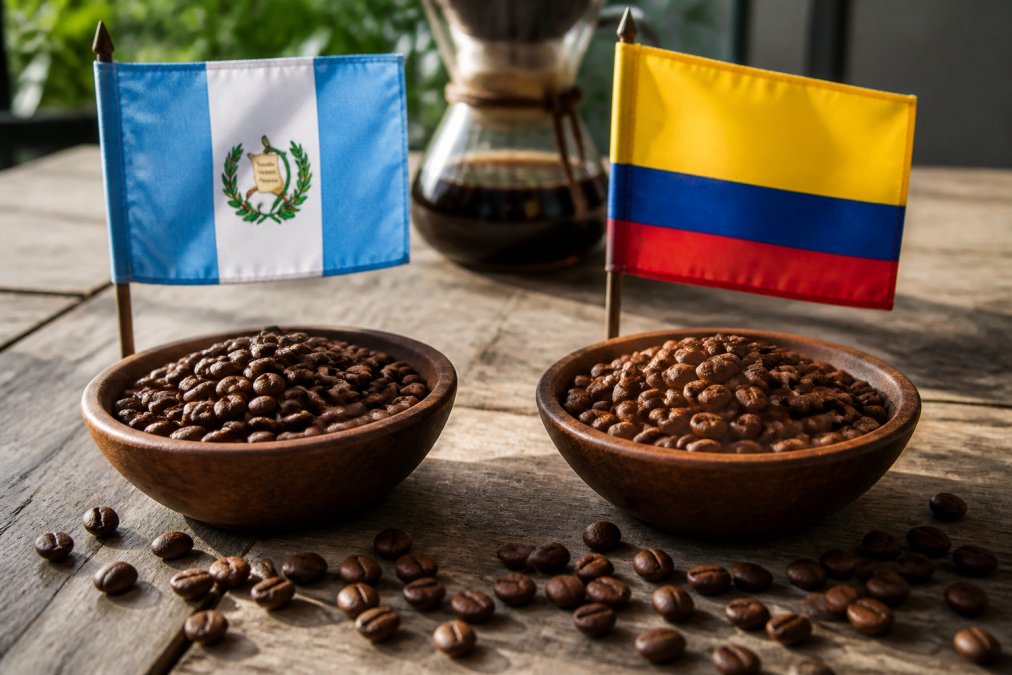
Guatemala vs Colombia coffee flavor profile comes down to a simple split: Guatemala leans bright and complex with tangerine, toffee, and cocoa, while Colombia delivers a smoother, more balanced cup with citrus, caramel, and chocolate. This guide from Sexy Barista breaks down exactly which origin fits your brewer, your milk, and your morning.
Ask ten specialty roasters which Latin American origin they reach for first and you'll get a split verdict. Both countries grow exceptional arabica. Both sit on volcanic soil at serious altitude. The difference lives in the cup, and it shows up fast once you know what to taste for.
Below, we'll walk through each origin's flavor profile, how altitude and processing shape the bean, and which one wins for espresso versus pour-over. You'll also get a pairing guide and a simple method for identifying flavor notes yourself.
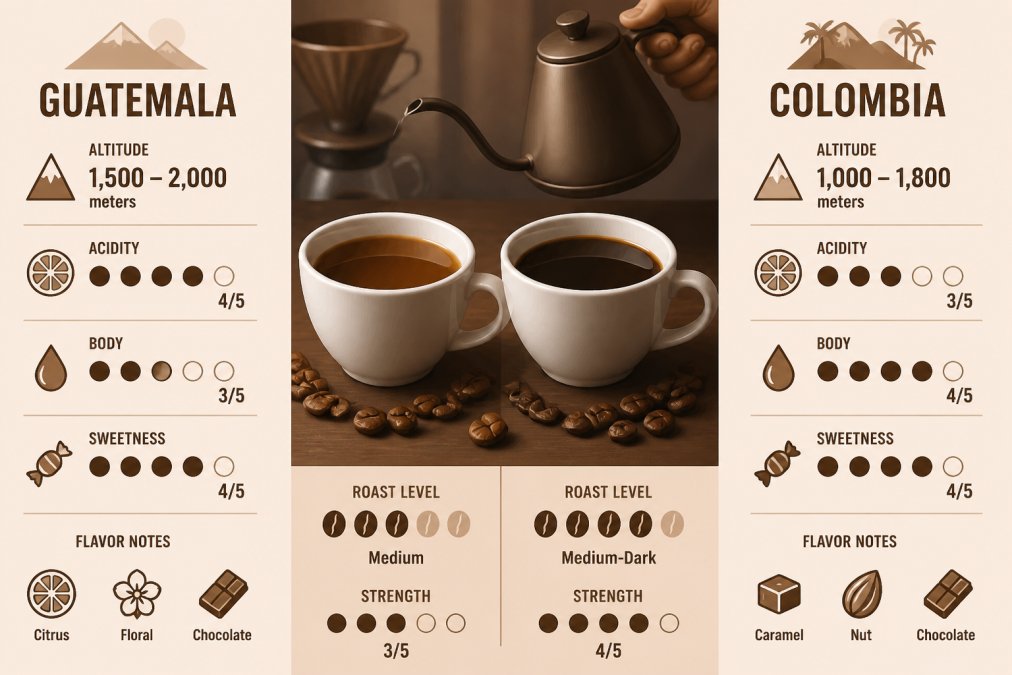
| Factor | Guatemala | Colombia |
|---|---|---|
| Primary notes | Tangerine, toffee, cocoa | Citrus, caramel, chocolate |
| Acidity | Bright, lively, structured | Medium, rounded, juicy |
| Body | Creamy, full | Smooth, silky |
| Best for | Espresso, milk drinks | Pour-over, espresso, daily brew |
| Roast fit | Medium | Medium |
Flavor Profile of Guatemalan Coffee: Tangerine, Toffee, and Cocoa
Guatemalan coffee is defined by high-altitude density and volcanic soil, producing a cup with sharp tangerine acidity, a toffee sweetness, and a cocoa finish that lingers. The best lots come from Huehuetenango, where thin air and cool nights slow cherry development.
That slow ripening concentrates sugars in the bean. The result is a flavor profile that reads complex rather than mellow, with a fruit-forward top note that survives milk.

You'll notice the acidity first. It's structured, almost citrus-peel sharp, then it softens into golden raisin and toffee as the cup cools. Cocoa sits underneath as the aftertaste settles.
Guatemalan Coffee Acidity Levels and Body
Guatemalan coffee acidity levels run high, often described as bright or lively rather than sharp. That acidity is the backbone of the cup, and it's why Guatemalan lots hold their shape in milk-based drinks instead of disappearing behind steamed milk.
The body is creamy and full, with a syrupy mouthfeel in espresso. If you brew it as pour-over, expect a lighter, tea-like texture with the same tangerine snap.
Flavor Profile of Colombian Coffee: Citrus, Caramel, and Chocolate
Colombian coffee is the more approachable of the two, with medium acidity, a smooth body, and a flavor profile built on citrus, caramel, and chocolate. It's balanced by design, which is exactly why it dominates American grocery shelves and specialty menus alike.

The sweetness reads as brown sugar or caramel rather than toffee. Fruit notes lean toward peach and soft citrus instead of tangerine peel. Chocolate anchors the finish, and the aftertaste is clean rather than heavy.
Where Guatemalan lots can feel demanding, Colombian lots are forgiving. They tolerate a wider range of grind sizes, water temperatures, and brew methods without falling apart.
How Growing Altitude and Volcanic Soil Shape Colombian Flavor
Colombia's coffee belt sits across three mountain ranges, and most specialty lots grow between 1,200 and 1,800 meters (federaciondecafeteros.org). Volcanic soil supplies the minerals; altitude supplies the density; the micro-climate supplies the slow, even ripening that builds sweetness.
Higher altitude means harder beans. Harder beans mean more concentration of flavor compounds per gram. That's the mechanical reason a well-grown Colombian lot tastes sweet rather than flat.
Key Differences Between Colombian and Guatemalan Beans
The core difference between Colombian and Guatemalan beans is intensity versus balance. Guatemalan coffee pushes acidity and complexity to the front; Colombian coffee smooths those edges into a rounder, more versatile cup.
Visually, Guatemalan beans often run slightly smaller and denser with a tighter center cut. Colombian beans tend to be a touch larger and more uniform. That's a rough guide, not a rule, since processing and roast level change appearance more than origin does.
A common mistake is judging origin by roast color. A dark roast will flatten either origin into the same smoky, bittersweet profile. If you want to taste the difference, buy both at a medium roast.
Body, Mouthfeel, and Aftertaste Compared
Mouthfeel is where the two diverge most in the cup. Guatemalan coffee gives you a creamy, coating body with a long, cocoa-driven aftertaste. Colombian coffee gives you a silky, lighter body with a cleaner, sweeter finish that fades faster.
If you drink your coffee black, that aftertaste difference is the whole story. If you drink it with milk, body matters more than aftertaste, and Guatemala usually wins.
Best Single Origin Coffee for Espresso and Milk-Based Drinks
The best single origin coffee for espresso depends on whether you drink it straight or with milk. For straight shots, Colombian lots offer a sweeter, more forgiving extraction. For milk-based drinks, Guatemalan lots hold their structure and cut through steamed milk.
Sexy Barista roasts both origins in small batches in Miami, and the two bags map cleanly onto that split. Cattivo is a medium-roast Guatemalan coffee from Huehuetenango with tangerine, golden raisin, and toffee notes, built for espresso and milk drinks. Mamiami is a medium-roast Colombian coffee with citrus, brown sugar, peach, and chocolate, versatile enough for espresso, pour-over, or everyday brewing. Both run $22.00 per bag.
If you're not sure which camp you're in, the Discovery Set lets you taste both side by side before committing to a subscription. Subscriptions save 20% on your first order and 10% on every recurring delivery, with free shipping over $60, and you can pause, skip, swap, or cancel at any time.
How to Identify Coffee Flavor Notes in the Cup
Learning how to identify coffee flavor notes is mostly about slowing down and tasting deliberately. Most people can detect sweetness, acidity, and body within a few sips once they know what to look for. The trick with these two origins is that their signatures show up at different temperatures, so a single hot sip will mislead you.
Try this sequence:
- Sip while the coffee is hot (around 160-170°F) and note the first impression. Guatemalan lots usually hit as bright and citrus-peel sharp; Colombian lots hit as rounded and sweet.
- Wait two minutes and sip again for the mid-palate. Look for toffee and golden raisin in Guatemalan cups, caramel and peach in Colombian cups.
- Let it cool to warm (around 120-130°F) and note the finish. Guatemalan cocoa lingers and coats; Colombian chocolate fades clean and fast.
- Breathe out through your nose after swallowing to catch the aroma. This is where tangerine versus soft citrus separates most clearly.
- Compare two origins side by side at the same roast level and the same brew method. Contrast teaches faster than isolation, and mismatched variables will send you chasing ghosts.
Keep a simple log: origin, roast level, brew method, and three words for what you tasted. After a dozen entries, you'll spot patterns in your own palate.
Telling the Beans Apart Before You Brew
Visual identification is a rough signal, not a verdict, but it is useful when you are staring at two unlabeled bags. Guatemalan beans from high-altitude lots like Huehuetenango tend to run smaller and denser with a tighter center cut and a slightly duller surface at the same roast level. Colombian beans tend to be a touch larger, more uniform in size, and slightly glossier because the denser cell structure holds oils differently during roasting.
Bean size is graded on screen sizes, and most specialty lots from both origins fall in the 15-18 screen range, so the difference is subtle rather than dramatic. What changes appearance far more than origin is roast level and processing. A washed Guatemalan and a washed Colombian at the same medium roast can look nearly identical. A natural-process Colombian will look blotchy and silver-skin heavy next to a washed Guatemalan of the same size.
If you want to run a fair visual test, buy both at the same roast level and the same processing method, then compare side by side under good light. Anything else is comparing roast to origin.
[Specialty Coffee(/blogs/coffee-journal/how-to-store-specialty-coffee-beans) Association cupping protocols | sca.coffee]
Pairing Guide: Food, Sustainability, and Bean Identification
Pairing follows the acidity. Guatemalan coffee's tangerine and cocoa notes work with dark chocolate (70% and up), aged cheese like aged cheddar or gouda, and almond pastries. Colombian coffee's caramel and citrus notes suit milk chocolate, banana bread, lighter fruit tarts, and breakfast pastries like croissants and cinnamon rolls. If you drink your coffee with milk, the pairing shifts toward the milk: Guatemalan cuts through it, Colombian blends into it.
Brewing Parameters That Match Each Origin
Most flavor comparisons stop at tasting notes and leave you guessing at the brewer. Here are starting points that most practitioners find reliable, then adjust by taste.
Guatemalan (dense, high-acid, cocoa finish)
- Pour-over (V60, Chemex): medium-fine grind, roughly the texture of table salt. Use a 1:16 coffee-to-water ratio (about 22g coffee to 350g water), water at 200-205°F, and a total brew time of 2:45-3:15. The density extracts fast, so if the cup tastes thin or harsh, coarsen the grind by one click.
- Espresso: dose 18g, yield 36g, target 27-30 seconds. Expect a syrupy body and a tangerine-to-cocoa arc. If shots run bitter, shorten the yield before you change the grind.
- French press: coarse grind, 1:15 ratio, 4-minute steep, then press slowly. The full immersion tames the sharp acidity and pushes toffee forward.
Colombian (balanced, medium-acid, clean finish)
- Pour-over: medium grind, 1:16 ratio, water at 195-200°F, total brew time 2:30-3:00. Colombian lots are forgiving, so a slightly wider grind window still produces a sweet cup.
- Espresso: dose 18g, yield 36-40g, target 25-30 seconds. The wider yield leans into the caramel and peach notes and keeps the shot from going syrupy.
- Drip machine: medium grind, 1:17 ratio. This is where Colombian coffee earns its reputation as the everyday brewer, because it holds sweetness even when the machine runs hot or fast.
A common pattern is that Guatemalan lots reward precision and punish sloppiness, while Colombian lots absorb small mistakes without falling apart. If you are learning to dial in a grinder, start with the Colombian bag.
Sustainability and Sourcing Signals
Both origins have strong fair-trade and organic supply chains, though certification varies by farm and importer. Rather than chase labels, look for roasters who publish roast dates, farm or cooperative names, and elevation ranges. Those three details tell you more about cup quality than a certification logo does. Freshness matters more than most labels suggest: coffee peaks roughly one to three weeks after roasting and fades noticeably by week six.
USDA organic certification standards
Conclusion: Which Origin Fits Your Morning Ritual?
The honest answer is that both origins deserve shelf space, and the choice comes down to how you drink your coffee. Guatemalan coffee rewards espresso drinkers and milk-based ritualists with structure and complexity. Colombian coffee rewards black-coffee drinkers and pour-over fans with balance and forgiveness.
Sexy Barista roasts both in small batches, so you can run the comparison yourself instead of taking anyone's word for it. Start with Cattivo for the Huehuetenango tangerine-toffee profile, or Mamiami for the citrus-caramel Colombian cup. Both are $22.00, both are subscription-eligible, and the Discovery Set gives you the full tasting experience if you'd rather decide after the first cup. Get started with Sexy Barista and find the origin that fits your morning.
Frequently Asked Questions
What coffee is better, Guatemalan or Colombian?
Neither wins outright; the better choice depends on your brewing method and taste. Guatemalan beans from regions like Huehuetenango tend to show brighter tangerine and toffee notes with a creamy body, while Colombian beans lean toward citrus, brown sugar, and chocolate with a smoother finish. If you drink espresso or milk-based drinks, try both as single origins and compare extraction. Sexy Barista's Cattivo (Guatemalan, $22) and Mamiami (Colombian, $22) make a clean side-by-side test.
How does the acidity of Colombian coffee compare to Guatemalan?
Both origins sit in the medium-to-high acidity range typical of washed Latin American arabica, but the character differs. Guatemalan coffee acidity levels often read as lively and citrus-adjacent, especially from high-altitude Huehuetenango lots, which can feel almost sparkling in pour-over. Colombian acidity tends to be softer and rounder, more malic or citric than tart, which is one reason Colombian beans work so well in milk drinks where sharp acidity can clash with dairy.
Which coffee origin is better for espresso-based drinks?
Colombian beans usually edge out for milk-based espresso because their brown sugar and chocolate notes blend smoothly with dairy, and their moderate acidity resists turning sour under pressure. Guatemalan beans can also shine as espresso, particularly medium roasts with toffee and cocoa notes, but they demand tighter extraction control. For a versatile starting point, try a medium-roast Colombian like Mamiami for lattes and a Guatemalan like Cattivo for straight shots or cortados.
What growing conditions influence the taste of these two origins?
Altitude, soil, and processing drive most of the difference. Guatemalan coffee often grows at 1,500 to 1,700 meters on volcanic soil, which slows cherry maturation and concentrates sweetness and acidity. Colombian farms span a wider altitude range across the Andes, and the washed process is standard in both countries. Micro-climate, rainfall timing, and roast level also shift the final cup, which is why two bags from the same origin can taste noticeably different.
Choosing between two excellent origins is a good problem to have, but it still takes a bag or two to know which one you actually reach for at 7 a.m. Sexy Barista roasts single-origin Colombian and Guatemalan coffee in small batches, optimizes both for espresso and milk-based drinks, and lets you pause, skip, swap, or cancel a subscription whenever you need to. Shop All and taste the difference for yourself.


Leave a comment
This site is protected by hCaptcha and the hCaptcha Privacy Policy and Terms of Service apply.