

Best Single Origin Beans for Milk Drinks: 2026 Guide
Table of Contents
- Why Single Origin Beans Belong in Milk Drinks
- Single Origin vs Blend for Espresso: What Changes in Milk
- The Best Roast for Lattes and Cappuccinos
- Top Single Origin Beans for Milk Drinks
- How to Dial In Single Origin Espresso for Milk Drinks
- Flavor, Freshness, and What to Ignore
- Frequently Asked Questions
Last Updated: September 13, 2026
Why Single Origin Beans Belong in Milk Drinks
The best single origin beans for milk drinks are medium-roast coffees with enough body, sweetness, and structure to stay recognizable once steamed milk enters the cup. This guide covers which origins hold their character under milk, how roast level changes what you taste, and how to pull consistent shots at home.
The old rule, blends for espresso, single origins for pour-over, made sense when single origin coffee was roasted light for filter. It stopped making sense once roasters started treating single origin beans as espresso candidates.
Milk is both amplifier and buffer: it carries sweetness forward and softens sharp edges. A coffee with no structure disappears into the milk; too much acidity fights it.
The three coffees below sit in the middle of that range on purpose, plus a dialing-in method for any home machine and two variables most guides skip: water chemistry and alternative milk compatibility.
Single Origin vs Blend for Espresso: What Changes in Milk
Single origin espresso shows one farm, region, or country's character; a blend combines several origins for a consistent, balanced profile. In milk drinks, that difference is less about quality and more about predictability versus personality.
Blends win on consistency: a roaster can adjust components seasonally to hit the same target flavor year-round, which matters for a cafe pulling hundreds of shots a day.
Single origin beans do something a blend can't: they let you taste a specific place. A washed Colombian tastes different from a wet-hulled Balinese coffee, and milk doesn't erase that gap if the coffee has enough body.
The trade-off is variability: each harvest shifts slightly, so your dial-in routine has to adapt. That's a feature for anyone who wants to learn what different origins taste like.
The Best Roast for Lattes and Cappuccinos
Medium roast is the best roast for lattes and cappuccinos because it develops enough caramelization for chocolatey, toffee-like sweetness while keeping the acidity and origin character milk would otherwise flatten. Light roasts read as sour under milk; dark roasts as ash.
Roast level is where most home baristas lose the plot: they buy a light-roasted single origin that scored well on a tasting table, then wonder why their latte tastes thin and sharp.
Inside the bean, the two acids that matter most for milk drinks are chlorogenic and citric acid. Past roughly 380 degrees Fahrenheit, chlorogenic acids break down into quinic and caffeic acids, precursors to bitter, roasty notes. Citric and malic acids, the bright, fruity snap in a light roast, are more heat-stable and survive longer. That's why a light roast tastes sour under milk: the fruit acids remain, but the sugars that would balance them haven't caramelized.
Push darker and the opposite happens. Sucrose starts caramelizing around 340 degrees Fahrenheit and continues through first crack; by second crack, most of it has turned to toffee and chocolate notes or been destroyed, leaving the bitter, carbonized character that reads as ash when milk dilutes it.
Medium sits in the window where both survive: sweetness for the milk to work with and enough acidity to keep the cup from tasting flat, a bean dropped between the end of first crack and the first pops of second crack, what roasters call "full city" or "full city plus."
That's why every coffee in our lineup is a medium roast: it's the roast level that lets a single origin actually show up in a milk drink.
Roast level and origin also interact: a washed Ethiopian at full city still tastes more floral and tea-like than a wet-hulled Sumatran at the same roast, because the green bean starts with a different acid and sugar profile. Roast level sets the ceiling on sweetness and structure in milk; origin sets the floor on how much character survives.
Top Single Origin Beans for Milk Drinks
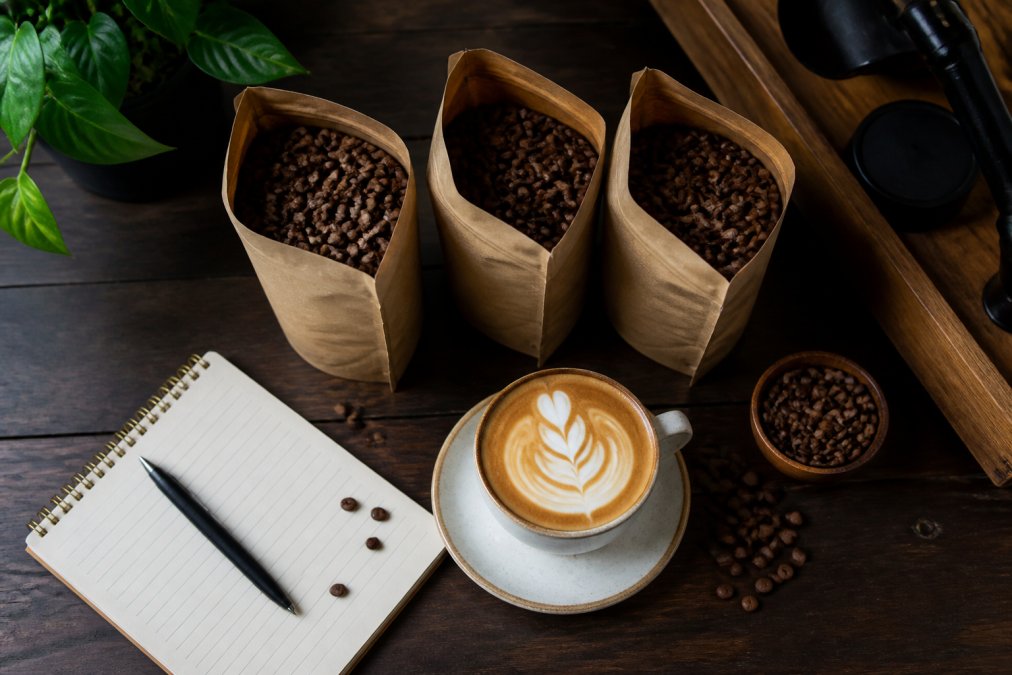
Each of the three single origin coffees below was chosen for how it performs in milk, not just how it tastes black. Quick comparison first.
| Coffee | Origin | Roast | Flavor Notes | Best For |
|---|---|---|---|---|
| Loosey Goosey | Bali | Medium | Baker's chocolate, cedar, molasses, vanilla | Syrupy body, easy drinking |
| Mamiami | Colombia | Medium | Citrus, brown sugar, peach, chocolate | Bright espresso, pour-over |
| Cattivo | Guatemala | Medium | Tangerine, golden raisin, toffee | Espresso and milk drinks |
| Discovery Trio | All three | Medium | Full range | Trying all three |
| Discovery Set | All three + cup | Medium | Full range | Gifting, complete kit |
Loosey Goosey: Bali Comfort in a Cup
Loosey Goosey is a medium-roast Bali coffee with notes of baker's chocolate, cedar, molasses, and vanilla, and its smooth, syrupy body makes it the easiest of the three to drink with milk. It's a wet-hulled Indonesian coffee, a method that tends to produce heavy body and low, rounded acidity.

In a latte, Loosey Goosey reads like a dessert without being sweet: molasses and vanilla come through the milk clearly, and the cedar adds a savory edge that keeps it from tasting one-dimensional.
Where it falls short: if you want brightness or fruit in your milk drinks, this isn't it. It's a comfort coffee, not a complex one.
Mamiami: Colombian Brightness That Holds Its Own
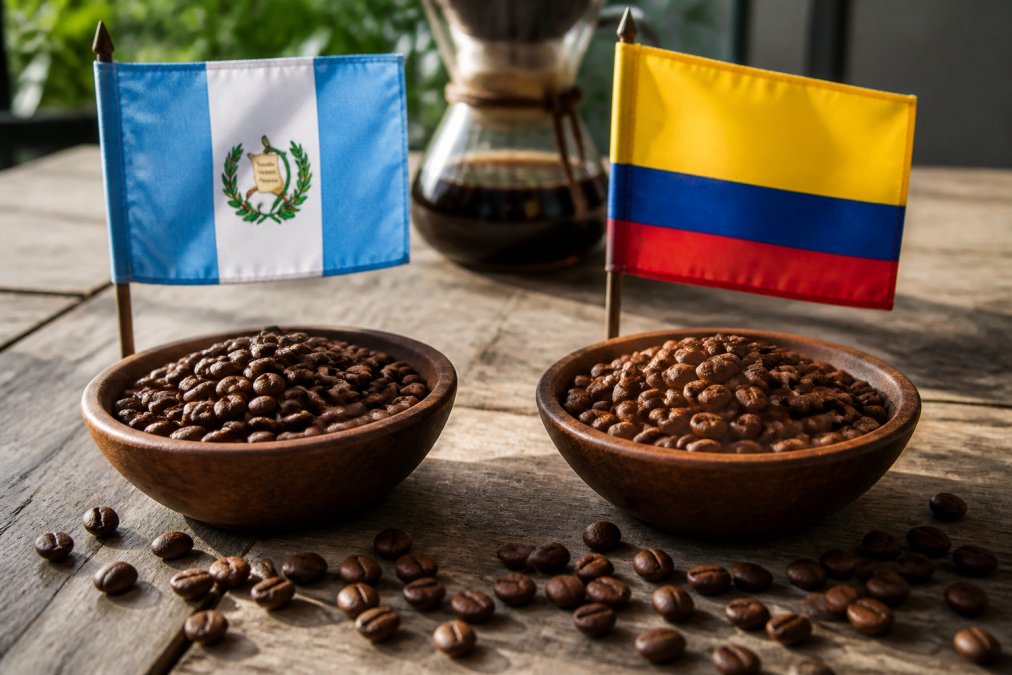
Mamiami is a medium-roast Colombian coffee with citrus, brown sugar, peach, and chocolate notes, and it's the liveliest of the three in milk. Colombian beans are the benchmark for balanced espresso, and this one leans brighter than most.
The citrus acidity survives steaming better than you'd expect, because the brown sugar and peach notes give the milk something to grab onto. In a flat white, you get coffee with fruit, not coffee drowned in dairy.
The honest limitation: if your shots run fast or your milk scalds, that brightness tips into sourness. Mamiami rewards good technique more than the other two.
Cattivo: Guatemalan Depth for Espresso Lovers
Cattivo is a medium-roast Guatemalan coffee from Huehuetenango with tangerine, golden raisin, and toffee notes, and a creamy, full body that makes it the strongest performer in milk-based drinks, the one I'd hand to someone who says single origin coffee can't stand up to a cappuccino.
The tangerine gives it lift, the golden raisin adds wine-like depth, and the toffee carries through the milk. It's the most layered of the three and changes most as it cools.
If you drink straight espresso more than milk drinks, Cattivo is the pick. It holds up both ways.
The Discovery Set and Trio: Try All Three
The Discovery Trio bundles all three coffees at $49.99 so you can taste them side by side and find your match. The Discovery Set adds a 5.5 oz artisan cup for $64.99, a $77 value that saves you $12.01.

Tasting all three back to back is the fastest way to learn what you prefer. Most people assume they want the brightest coffee, then reach for the syrupy one every morning.
How to Dial In Single Origin Espresso for Milk Drinks
Dialing in single origin espresso for milk drinks means adjusting grind, dose, and yield until the shot tastes sweet and balanced on its own, then adding milk. If the shot is sour or bitter before milk, milk won't fix it.
Start with a baseline and change one variable at a time.
- Dose: 18 g in the basket for a standard double
- Yield: 36 g out, a 1:2 brew ratio, as your starting point
- Time: 25-30 seconds from first drip to finish
- Grind: adjust finer if the shot runs under 25 seconds, coarser if it runs past 32
For milk drinks, pull slightly longer: a 1:2.5 ratio, roughly 45 g out from 18 g in, gives more sweetness and less intensity, which survives milk better than a ristretto.
Taste the shot before you steam. Sour? Grind finer or extend the yield. Bitter and drying? Grind coarser or shorten it. Only add milk once the straight shot tastes good.
Two variables most guides ignore. Water chemistry: espresso is roughly 90% water, and high alkalinity can buffer the acids that give single origin coffee its character, potentially producing flat shots. Temperature: brew between 200 and 205 degrees Fahrenheit for medium roasts; lower temperatures can under-extract and taste sour.
Flavor, Freshness, and What to Ignore
Freshness matters more than almost any other variable, and roast date is the only number on the bag worth checking. Coffee peaks roughly 4 to 14 days after roasting for espresso, then slowly declines.
What to ignore: most language on specialty coffee bags. "Small batch" and "artisan" aren't regulated. "Organic" and "fair trade" are verifiable and matter to many buyers, but they don't tell you how the coffee will taste in milk.
The variables that actually predict how a coffee performs in a milk drink are origin, roast level, processing method, and roast date. Everything else is marketing.
The practical version: check the roast date, buy whole bean, grind right before you brew, and store beans in an airtight container away from light and heat, never the fridge.
Alternative Milk Compatibility: The Variable Most Guides Skip
Dairy milk is roughly 87% water, 3.5% fat, and 3.4% protein, and that fat-and-protein matrix buffers acidity and carries chocolate and caramel notes forward (usda.gov). Swap in a plant milk and you change the drink's chemistry, not just its flavor, the difference between a latte that sings and one that tastes like wet cardboard.
Oat milk is the closest plant-based analog to dairy for single origin pairing. Its natural sugars, typically 4 to 7 grams per cup from enzymatic starch breakdown, amplify the chocolate, molasses, and toffee notes in a medium roast, making it a natural fit for a wet-hulled Indonesian like Loosey Goosey. Barista formulas add a stabilizer (often dipotassium phosphate or gellan gum) that holds the emulsion under steam, so they texture more like dairy.
Almond milk is thinner, usually 1 to 2 grams of fat per cup versus dairy's 8, so it buffers less. Bright, citric coffees like Mamiami benefit: peach and citrus read more clearly with less fat muting them. The trade-off is body, an almond milk flat white tastes lighter and more tea-like, so if you want syrupy mouthfeel, almond milk is the wrong choice regardless of the bean.

Soy milk sits between oat and almond on fat (around 4 grams per cup) and has the highest protein of the three, giving it the best natural emulsification for latte art. Its neutral flavor lets origin character through with the least interference, the most transparent option for tasting what a single origin does under milk, though its beany edge can clash with very floral coffees.
Coconut milk is the outlier. Its high saturated fat (often 5 grams or more per cup in canned versions) coats the palate and mutes acidity hard, a poor match for bright coffees, a surprisingly good one for dark, chocolatey profiles (usda.gov). Most baristas treat it as a dessert-drink base, not a daily latte milk.
Decaf Single Origin: A Real Option, Not a Compromise
If you want decaf, look for single origin decaf rather than blends: origin character still comes through, and you avoid the flat, generic taste of mass-market decaf. The key variable is the decaffeination method, Swiss Water Process and CO2-processed decafs preserve more of the bean's original acidity and sweetness than solvent-based methods, because they remove caffeine without stripping the compounds that make a coffee taste like itself. A medium-roast, Swiss Water-decaffeinated Colombian or Guatemalan still holds chocolate and caramel notes under milk, just without the caffeine edge. Ask the roaster which method they use.
Frequently Asked Questions
What type of coffee beans are best for milk drinks?
Medium-roast single origin beans with chocolatey, caramel, or nutty notes work best because they complement milk without getting lost. Beans with high acidity or delicate floral notes can disappear under steamed milk. Look for tasting notes like baker's chocolate, toffee, or brown sugar. Single origin beans from Colombia, Guatemala, and Bali are excellent choices for milk-based drinks.
Do single origin beans taste better than blends in lattes?
It depends on what you want. Blends are designed for consistency and often have chocolatey, nutty profiles that pair easily with milk. Single origin beans offer more distinct, complex flavors and let you taste the terroir of a specific region. In a latte, a well-chosen single origin can add unique character, but it needs enough body and sweetness to stand up to the milk.
How does milk affect the flavor profile of single origin espresso?
Milk fat coats your palate and mutes delicate flavors like floral aromatics and citrus acidity. It also adds sweetness and creaminess. This means bright, acidic single origins can taste flat in a latte, while beans with chocolatey, caramel, or syrupy notes shine. For milk drinks, choose single origin beans with medium to full body and lower perceived acidity.
Are light roast single origin beans good for milk-based drinks?
Light roasts can work, but they are harder to dial in for milk drinks. Their higher acidity and tea-like body often get buried under steamed milk. If you prefer light roasts, look for ones with natural sweetness and stone fruit notes. Medium roasts are generally the sweet spot for milk drinks because they balance sweetness, body, and acidity without overpowering the milk.
How fresh should single origin beans be for espresso?
For espresso, single origin beans are best used 7-21 days after the roast date. Very fresh beans (under 5 days) can produce uneven shots due to off-gassing. Beans older than 4 weeks lose complexity and crema. Check the roast date on the bag, not the best-by date. Sexy Barista roasts in small batches.


Leave a comment
This site is protected by hCaptcha and the hCaptcha Privacy Policy and Terms of Service apply.