
How to Pull Sweet Espresso Shots at Home in 2026
Last Updated: October 25, 2026
Quick Summary
Sweet espresso comes from landing extraction in the middle of the curve: fresh beans, a level puck, the right grind, and a shot that stops before bitterness. Lock your dose, adjust grind one step at a time, and taste after each change. Start at a 1:2 ratio, like 18 grams in and 36 grams out.
- Grind finer when shots taste sour; grind coarser when they taste bitter.
- Keep dose fixed for the whole session and change only one variable at a time.
- A steady, honey-like flow signals the puck and grind are cooperating.
- Sour and bitter together usually means channeling, so improve distribution and level your tamp.
- Log dose, grind, yield, time, and taste for every shot to spot patterns.
Table of Contents
- Why Your Espresso Tastes Sour or Bitter (and How Sweetness Fits In)
- Start With the Best Coffee Beans for Espresso
- Prep the Puck: Grind Size, Dose, Distribution, and Tamping
- How to Dial In Espresso: A Repeatable Method for Sweetness
- Set Your Espresso Brew Ratio and Dose-to-Yield
- Espresso Shot Timing: Reading the Flow, Not Just the Clock
- A Sensory Decision Tree for Sour, Sweet, and Bitter Shots
- Pull Your First Sweet Shot With Sexy Barista Beans
- Frequently Asked Questions
Why Your Espresso Tastes Sour or Bitter (and How Sweetness Fits In)
Sweet espresso is not luck.
The core idea: sweetness is what you taste when extraction lands in the middle.
At Sexy Barista, we roast small batches in Miami and cup them as espresso specifically to find where that band sits for each origin.
Below, we break down the full process, from bean choice to the last diagnostic tweak, plus a decision tree for the next time a shot tastes off.
Start With the Best Coffee Beans for Espresso
The best coffee beans for espresso are freshly roasted, single-origin lots with enough natural sweetness to survive the pressure of a shot. No grinder setting fixes coffee that has already gone flat.
Three things matter most when you shop:
- Roast date, not just roast level. You want beans rested a few days off the roast, not sitting in a warehouse.
- Origin character. A lot with fruit and caramel notes has more sweetness to give than a generic blend.
- Consistency. Small-batch roasting keeps batch-to-batch variation low, which makes dialing in far easier.
Our best single origin beans for espresso guide walks through specific lots suited to sweet shots, and our best coffee beans for home machines guide matches beans to the machine you actually own.
Roast Level, Bean Age, and Perceived Sweetness
Roast level and bean age both change how sweet a shot tastes, independent of technique.
Bean age is the quieter variable. Very fresh beans off-gas and pull unevenly; beans weeks old lose the aromatics that read as sweetness.
How you store beans matters here too. Our guide on how to store specialty coffee beans covers keeping them fresh so the sweetness survives to the day you pull the shot.
Prep the Puck: Grind Size, Dose, Distribution, and Tamping
A level, evenly packed puck is the foundation of every sweet shot.
Work through prep in this order:
- Grind fresh. Grind immediately before brewing. Pre-ground coffee loses aromatics fast.
- Set your dose. Weigh the coffee in grams on a scale. Consistency beats eyeballing.
- Distribute. Level the grounds in the portafilter so the bed is flat before you tamp.
- Tamp evenly. Press straight down with steady pressure. The goal is a flat, level puck, not maximum force.
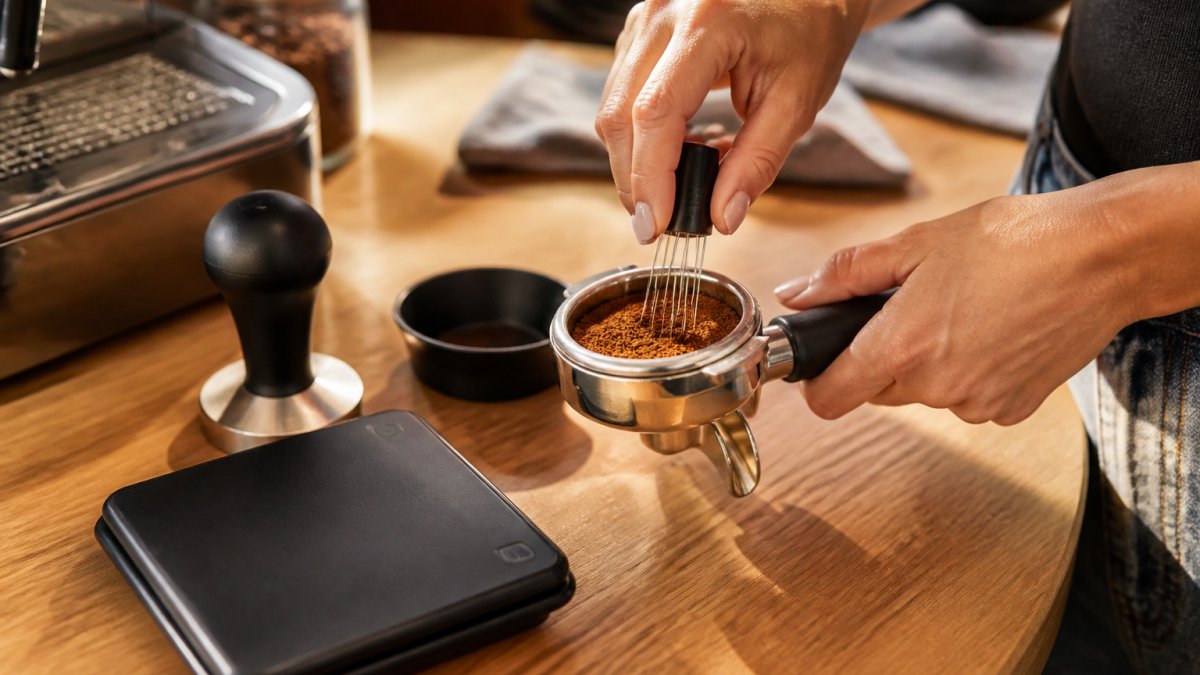
Watch out: tamping at an angle tilts the puck and pushes water to one side. That is channeling, and it will wreck an otherwise good shot.
How to Dial In Espresso: A Repeatable Method for Sweetness
Dialing in espresso means changing one variable at a time and tasting until the shot lands in the sweet zone. Most home baristas fail not from lack of information but because they change grind, dose, and yield together, then cannot tell which change helped.
The goal is to move extraction from sour (under-extracted) through sweet (balanced) and stop before bitter (over-extracted). Grind is the primary lever because it changes how fast water moves through the puck.
The order of operations
Work in this sequence so each shot teaches you something:
- Lock the dose. Pick a dose in grams that fits your basket, commonly 18 grams in a standard double basket, though smaller baskets take 14 to 16 grams and larger ones take 20 or more. Keep it fixed for the entire session.
- Lock a starting grind. Choose a grind that produces a slow, honey-like flow rather than a gush or a drip. If you have no reference point, start finer than you think and back off.
- Pull and taste. Note whether the shot reads sour, sweet, or bitter, and whether the finish is clean or drying.
- Adjust grind only. Sour means grind finer. Bitter means grind coarser. Make one small step on the grinder, not a large jump.
- Retaste before touching anything else. Only after grind changes stop improving the shot should you adjust yield or dose.
- Log every shot. Dose, grind setting, yield, time, and taste. That log is the whole trick, after a handful of shots you can see the pattern instead of guessing.
Holding variables constant
A dial-in only works if the puck is built the same way every time. Weigh the dose, distribute level, and tamp straight down with steady pressure. If prep varies shot to shot, you are changing two variables at once and the taste result becomes noise.
Use the same basket, the same tamper, and the same distribution tool for the whole session. Change one thing at a time means exactly that.
Knowing when sweetness has improved
Sweetness is not the absence of sour and bitter, it is the presence of a round, clean middle. A shot moving toward sweet tastes less sharp up front, less drying on the finish, and carries lingering sweetness as it cools.
If a shot tastes sweet but thin, you have extraction in the right zone but not enough coffee or yield, adjust yield or dose next.
A worked example
Suppose you dose 18 grams, grind at setting 12, and pull 36 grams in 22 seconds. The shot tastes sour and thin. Grind finer to 11: 36 grams in 27 seconds, still slightly sour but rounder. Grind finer to 10: 36 grams in 34 seconds, now sweet with a clean finish. Stop there. Had you also changed dose or yield, you would not know which change produced the sweetness.
A common mistake is chasing a target time instead of a target taste. Time is a symptom, not a goal, the clock tells you whether the puck resisted water the way you expected, but only your palate tells you whether the shot is sweet.
Set Your Espresso Brew Ratio and Dose-to-Yield
Espresso brew ratio is liquid yield weight compared with dry dose. A 1:2 ratio means 18 grams in, 36 grams out, a solid starting point for sweet espresso on most home setups.
Why weight and not volume? Crema lies. A shot can look full and still be under-extracted. A scale tells you the truth.
- Start at 1:2. Adjust from there based on taste.
- Too sour? Try a slightly longer yield, like 1:2.2.
- Too bitter? Shorten the yield or grind coarser.
The dose-to-yield ratio and the grind setting work together. Change one, then retaste before touching the other.
Espresso Shot Timing: Reading the Flow, Not Just the Clock
Espresso shot timing is a diagnostic, not a target. A typical shot runs 25 to 30 seconds, but the clock only tells part of the story. Read the flow.
What to watch:
- A fast, gushing flow usually means under-extraction. The shot will taste sour and thin.
- A slow, dripping flow points to over-extraction. Expect bitterness and a dry finish.
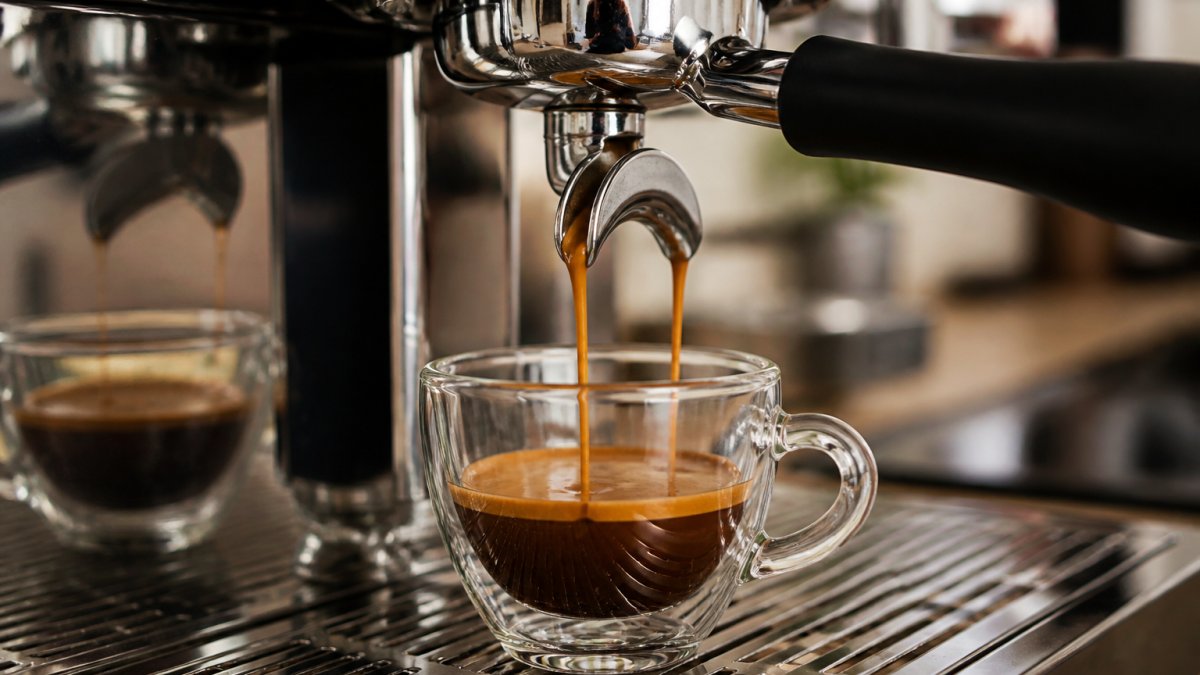
- A steady, honey-like stream with good crema is your sign the puck and grind are cooperating.
If your machine struggles to hold temperature or pressure, that limits how sweet a shot can get no matter how perfect your prep is. Know your machine's limits before you blame the beans.
A Sensory Decision Tree for Sour, Sweet, and Bitter Shots
Use taste as your guide, then follow the branch that matches it. This is the fastest way to fix a shot without guessing, even on machines that cannot adjust every variable.
Taste deliberately: slurp a small amount and note the first impression, the middle (does it fill out or stay thin), and the finish (clean, drying, or ashy). Sweetness shows up in the middle and lingers; sourness hits the sides of the tongue and back of the jaw; bitterness sits at the back and leaves a dry, chalky feeling.
| What you taste | Likely cause | Mechanism | First fix | If that fails |
|---|---|---|---|---|
| Sour, thin, salty | Under-extraction | Water moves too fast and dissolves acids before sugars | Grind finer | Lengthen yield slightly (e.g., 1:2 to 1:2.2) |
| Bitter, dry, ashy | Over-extraction | Water stays in contact too long and pulls bitter compounds | Grind coarser | Shorten yield |
| Sour and bitter together | Channeling | Water punches through weak spots, over-extracting some areas and under-extracting others | Improve distribution and level tamp | Check grind consistency and basket for clogs |
| Sweet but weak | Yield too long for the dose | Too much water dilutes the sweet middle | Shorten yield | Increase dose slightly |
| Flat, no sweetness | Stale beans or water issue | Aromatics have faded or minerals are out of balance | Use fresher beans | Check roast date and water |
| Sweet but muddy | Channeling or uneven grind | Mixed particle sizes extract at different rates | Improve distribution | Check grinder burr condition |
Distinguishing channeling from under-extraction
Both can taste sour, but channeling usually produces a shot that is sour and bitter at once, or sour up front and drying on the finish. Check the puck: visible cracks, holes, or a crater on one side mean channeling. Uneven flow, one side blonding before the other, is another sign.
When your machine limits you
Many home machines cannot adjust temperature or pressure. Focus on what you can control: grind, dose, yield, and prep. Grind is the most powerful lever on any machine, a finer grind extracts more even at lower temperature, a coarser grind extracts less at higher.
If your machine has a pressurized basket, the rules change: the basket itself creates resistance, so grind matters less and freshness matters more. In that case, prioritize fresh beans and a consistent dose over grind adjustments.
Water as a sweetness variable
Water composition is an underrated cause of flat or harsh shots. Too soft can under-extract and taste sour; too hard can over-extract and taste bitter or chalky. Moderate mineral content produces the most balanced extraction. If shots taste flat no matter what you change, try filtered water before replacing equipment.
If bitterness keeps showing up no matter what you change, our guide on why specialty coffee tastes bitter and how to fix it digs into the causes in more detail.
Pull Your First Sweet Shot With Sexy Barista Beans
Great espresso starts with beans worth dialing in. Our single-origin lots are roasted in small batches in Miami and chosen for how they perform in a shot. Cattivo brings tangerine, golden raisin, and toffee with a creamy body.
Each is built for espresso and milk drinks, and each rewards the dial-in method above.
Ready to pull your first sweet shot? Shop Mamiami and start dialing in.

Frequently Asked Questions
How do you make espresso taste sweeter?
Sweetness in espresso comes from a balanced extraction, not from adding sugar. Start with freshly roasted beans, grind fine enough that a shot runs in a controlled flow, and aim for a dose-to-yield ratio around 1:2. If the shot tastes sour, the coffee is under-extracted, so grind finer or extend the shot slightly. If it tastes bitter or dry, it is over-extracted, so grind coarser or shorten the shot. Small, one-variable changes get you to a sweeter cup faster than chasing several adjustments at once.
What are the best coffee beans for espresso at home?
Look for freshly roasted, single-origin or blend coffees with a roast date you can see. Medium roasts tend to show sweetness and balanced acidity without the charred notes that can mask it. Sexy Barista roasts small batches in Miami, and its medium-roast single origins, such as Cattivo from Guatemala with tangerine and toffee notes, are built for espresso and milk drinks. Buy in amounts you will finish within a few weeks so the beans stay fresh.
What espresso brew ratio should I use for a balanced shot?
A common starting point is a 1:2 ratio, meaning 18 grams of coffee in and about 36 grams of espresso out. That ratio gives you a concentrated but balanced shot with room to taste sweetness and acidity. If your shots taste sharp or thin, try a slightly longer yield, such as 1:2.5. If they taste heavy or bitter, shorten the yield. Keep your dose steady and change only the yield or the grind so you can tell what actually improved the flavor.
Why does my espresso taste sour or bitter?
Sourness usually means the shot is under-extracted: the grind is too coarse, the dose is too high for the yield, or the shot finished too quickly. Bitterness points to over-extraction: too fine a grind, too long a shot, or water that is too hot. Channeling, where water punches through weak spots in the puck, can cause both sour and bitter notes in the same shot. Improve distribution and tamping, then adjust grind in small steps and taste again.
Sweet espresso is a skill, not a purchase, but the right beans make learning it far easier. Start with fresh, small-batch single-origin coffee, lock your dose, and adjust one variable at a time until the shot tastes balanced. Get started with Sexy Barista and taste what properly dialed espresso can do.



Leave a comment
This site is protected by hCaptcha and the hCaptcha Privacy Policy and Terms of Service apply.