
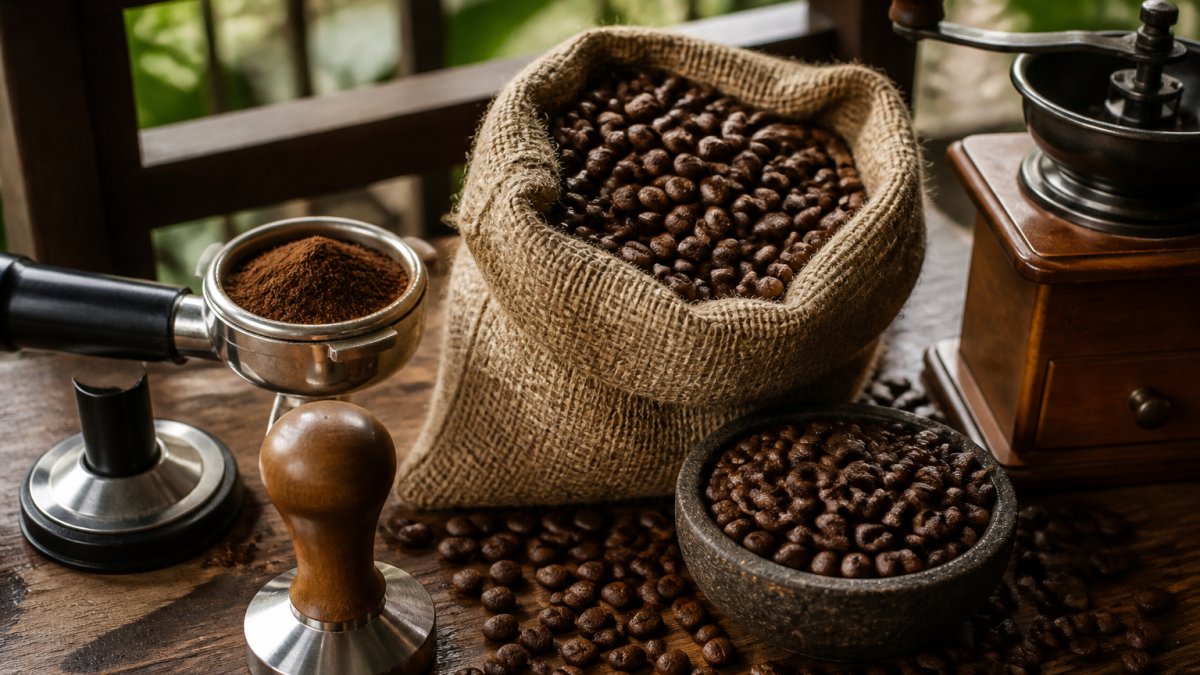
Best Bali Coffee Beans for Espresso: 2026 Buying Guide
Table of Contents
- Why Bali Coffee Beans Belong in Your Espresso Machine
- What Makes Bali Kintamani Coffee Different
- The Best Roast for Espresso: Why Medium Roast Wins
- Espresso Grind Size: Getting Bali Beans Right
- How to Dial In Espresso with Bali Beans
- How to Choose and Buy Bali Coffee Beans for Espresso
- Frequently Asked Questions
Last Updated: October 15, 2026
Why Bali Coffee Beans Belong in Your Espresso Machine
Bali coffee beans deserve a spot next to your grinder because they bring a syrupy body, low acidity, and deep sweetness that most espresso blends struggle to match.
Here is the short version: if your espresso tastes thin, sour, or sharp no matter what you adjust, the origin is often the problem, not your technique.
Bali beans fix that. They are dense, low-acid, and built for the 25-to-30-second pull.
Below, we break down what makes Kintamani coffee different, how to pick the right roast, and how to dial in a shot that tastes like chocolate and molasses instead of ash.
What Makes Bali Kintamani Coffee Different
Bali Kintamani coffee is a single-origin Arabica grown in the volcanic highlands around Mount Batur, where mineral-rich soil and cool nights slow cherry development and concentrate sweetness. That slow ripening is the whole story.
Most Kintamani lots are wet-hulled, a processing method unique to Indonesia. Farmers strip the parchment off while the bean is still damp, which raises the bean's moisture and mutes bright acidity.
The result: heavy body, gentle fruit, and a savory, earthy backbone. It tastes nothing like a washed Ethiopian or a clean Colombian.
Wet-Hulled Processing and What It Does to Flavor
Wet-hulling trades clarity for weight. You lose some of the floral top notes you would get from a washed bean, and you gain a thick, coating mouthfeel and notes of cedar, dark chocolate, and molasses.
For espresso, that trade is almost always worth it. Those low, sweet, earthy flavors survive milk far better than delicate florals do.
The one drawback: wet-hulled beans can taste muddy if they are roasted too dark. A medium roast keeps the sweetness intact.
The Best Roast for Espresso: Why Medium Roast Wins
Medium roast is the best roast for espresso made with Bali beans. It develops enough sugar for caramel and chocolate notes while keeping the bean's natural sweetness and body intact.
Dark roast is the common mistake here. It feels safe, but it flattens a wet-hulled Bali into generic smoke and ash. You lose the molasses and vanilla that make the origin worth buying.
A medium roast also gives you range. The same bag works for straight shots, cortados, and lattes without turning bitter.
Espresso Grind Size: Getting Bali Beans Right
Espresso grind size for Bali beans should sit fine enough to slow the shot to 25 to 30 seconds at a 1:2 ratio but coarse enough to avoid channeling. Start slightly finer than a drip grind and adjust from there.
Here is the part most grind guides skip: Bali beans are not a generic bean. Wet-hulled Arabica from the Kintamani highlands finishes with higher retained moisture and a softer, more porous cell structure than a washed Colombian or Ethiopian. That changes how the bean behaves in three concrete ways:
- It feeds the burrs differently. Damp, slightly spongy beans shear rather than shatter, so you often need to grind a notch or two finer than you would for a washed bean on the same machine to hit the same 25-to-30-second window.
- It produces more fines at the same setting. Those fines migrate to the bottom of the puck and slow the shot late, which can make a shot look correctly timed while tasting hollow in the middle. Watch the flow, not just the clock.
- It settles in the basket differently. Wet-hulled grounds are fluffier off the chute, so a leveling tool or a gentle tap before tamping matters more than it does with a denser washed bean.
Matching Grind to Your Grinder
Not every grinder handles a damp, dense bean the same way. A few patterns worth knowing:
- Conical burr grinders (common on home espresso setups) tend to produce a wider particle spread on wet-hulled beans. You may need to nudge finer and accept a slightly longer shot to compensate.
- Flat burr grinders give a tighter distribution, which suits Bali beans well, the syrupy body comes through more cleanly and channeling drops.
- Blade grinders are the wrong tool here. The uneven particle size exaggerates the fines problem and makes a wet-hulled bean taste muddy rather than sweet.
Reading the Shot, Not Just the Timer
Signs you are close:
- Shot runs 25 to 30 seconds for a 1:2 ratio
- Crema is thick, dark, and persistent, Bali beans usually give more crema than a washed bean at the same roast level
- Taste is sweet and syrupy, not sour or bitter
- Puck knocks out clean and holds its shape
If the shot gushes out in 15 seconds, grind finer. If it chokes and drips, grind coarser. If the time is right but the shot tastes thin, the problem is usually distribution, not grind, try a leveling tool or a slightly coarser grind with a firmer tamp before you chase the setting further.
Grind Freshness and the Rest Window
Grind setting and roast rest are linked. A bean rested 7 to 14 days after roast grinds predictably; a bean pulled straight off the roaster is still degassing and will fight the grinder, gushing no matter how fine you go. If your shots suddenly run fast on a bag that worked yesterday, check the roast date before you touch the grind dial, you may simply be at the end of the rest window and into staleness.
How to Dial In Espresso with Bali Beans
Dial in espresso with Bali beans by fixing one variable at a time: dose first, then grind, then yield. Change only one thing per shot or you will chase your own adjustments in circles.
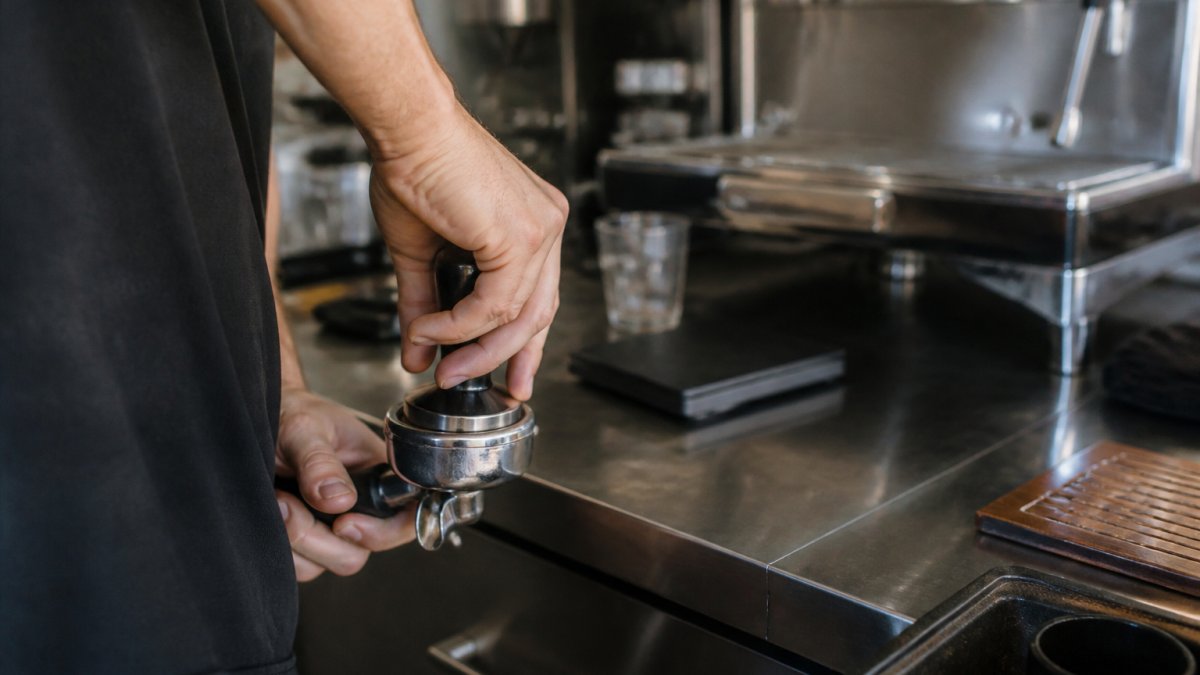
Start with a baseline dose of 18 grams in and 36 grams out. Pull the shot and taste it. Then adjust:
| What You Taste | Likely Cause | The Fix |
|---|---|---|
| Sour, thin, sharp | Under-extracted | Grind finer or raise dose |
| Bitter, dry, ashy | Over-extracted | Grind coarser or lower dose |
| Gushing, no body | Too coarse | Grind finer, check tamp |
| Choking, dripping | Too fine | Grind coarser |
Dialing In for Milk Drinks vs. Straight Shots
For milk drinks, pull slightly longer and sweeter. A 1:2.5 ratio brings out the chocolate and molasses that cut through steamed milk.
For straight shots, keep it tighter at 1:2. You want the cedar and vanilla notes front and center without the bitterness that a longer pull can introduce.
One insider note most guides miss: Bali beans taste better with a slightly cooler brew temperature.
How to Choose and Buy Bali Coffee Beans for Espresso
Buy Bali coffee beans for espresso by checking four things in this order: roast date, processing method, roast level, and origin specificity. Skip anything without a stated roast date, no matter how good the packaging looks, a beautiful bag with a "best by" stamp tells you nothing about how the bean will pull.
The Four Criteria That Actually Matter
1. Roast date, not best-by date. Espresso needs beans rested roughly 7 to 14 days after roast, when they have degassed enough to pull consistently without gushing.
2. Processing method. Wet-hulled (giling basah) is the Bali signature and the reason these beans have their syrupy body and low acidity.
3. Roast level. Medium roast is the right call for espresso.
4. Origin specificity. "Bali" alone is not enough. Look for Kintamani, Mount Batur, or a named cooperative or farm.
Matching the Bean to Your Espresso Setup
The same Bali bean behaves differently across machines. A few starting points:
- Manual lever or semi-auto with a PID: You have full control over temperature and pressure, so a medium-roast wet-hulled Bali shines. Pull at a slightly cooler brew temperature than you would for a washed bean, most practitioners find backing off a few degrees sharpens the molasses and vanilla notes.
- Automatic or super-automatic machines: These run hotter and faster, which can push a wet-hulled bean toward bitterness. Choose a medium roast with a stated roast date and let it rest the full 10 to 14 days before loading the hopper.
- Milk-forward drinkers (lattes, cappuccinos, cortados): Pull slightly longer and sweeter, a 1:2.5 ratio brings out the chocolate and molasses that cut through steamed milk.
- Straight-shot drinkers: Keep it tighter at 1:2 so the cedar and vanilla notes stay front and center without the bitterness a longer pull can introduce.
Freshness and Shipping
Coffee is a perishable product, and shipping time counts against your rest window. A few rules that protect quality:
- Buy from a roaster who prints the roast date and ships within a day or two of roasting.
- If you live far from the roaster, expect the bean to arrive partly through its rest window, that is fine, but plan to drink it within two to three weeks of the roast date.
- Store beans in the original valve bag or an opaque airtight container, away from light and heat. Do not refrigerate; the moisture cycle ruins wet-hulled beans faster than anything else.
- Buy in a size you will finish in two to three weeks. A larger bag that sits open for a month will taste flatter than a smaller bag bought twice.
What to Look For in a Bali Espresso Bean
A short checklist you can run against any bag:
- Printed roast date within the last two weeks
- Wet-hulled processing stated on the label
- Medium roast level
- Named origin (Kintamani, Mount Batur, or a specific farm or cooperative)
- Single origin, not a blend marketed as "Indonesian"
- Roaster who ships fresh and states their shipping window
Our pick is Loosey Goosey, a medium-roast single-origin Bali with notes of baker's chocolate, cedar, molasses, and vanilla. It is wet-hulled, organic, and roasted in small batches in Miami.

What sets it apart is the balance. Many Bali beans lean too earthy or too smoky.
If you want to explore more, our Discovery Set lets you taste across origins before committing to a full bag.
Frequently Asked Questions
Is Bali coffee good for espresso?
Yes. Bali coffee beans, particularly those from the Kintamani highlands, produce syrupy, full-bodied espresso with chocolate and molasses notes. The wet-hulled processing gives them a heavy mouthfeel that holds up well under pressure and cuts through milk in lattes and cappuccinos. Look for a medium roast to balance sweetness and acidity without the bitterness that comes from over-roasting.
Should Bali coffee beans for espresso be dark roasted?
Not necessarily. A medium roast is often the best roast for espresso because it preserves the bean's natural sweetness and fruit notes while developing enough body for a rich shot. Dark roasting can mask the distinctive cedar and chocolate flavors that make Bali beans unique, leaving you with smoke and bitterness instead. Start with medium and adjust only if your machine runs hot.
How do you dial in Bali coffee beans for espresso?
Start with a 1:2 ratio (18 grams in, 36 grams out) in 25-30 seconds. If the shot tastes sour, grind finer. If it tastes bitter or harsh, grind coarser. Bali beans tend to extract quickly because of their wet-hulled density, so small grind adjustments matter. Keep dose consistent and change only one variable at a time until the shot tastes balanced and sweet.
What does Bali coffee taste like as espresso?
Bali coffee as espresso delivers baker's chocolate, cedar, molasses, and vanilla notes with a smooth, syrupy body and low acidity. The wet-hulled process gives it an earthy, full mouthfeel that stands out in milk drinks. Compared to brighter African or Colombian beans, Bali espresso leans rich and comforting rather than fruity or floral.
Getting a great shot from Bali beans comes down to two things: buying fresh, medium-roasted beans and adjusting one variable at a time. Sexy Barista roasts small batches of single-origin Bali in Miami, with profiles built for espresso and milk drinks, flexible subscriptions you can pause or skip anytime, and free shipping on orders over $60. Get started with Sexy Barista and pull a shot that tastes like chocolate, molasses, and vanilla instead of ash.


Leave a comment
This site is protected by hCaptcha and the hCaptcha Privacy Policy and Terms of Service apply.