

Best Colombian Coffee Beans for Espresso: 2026 Guide
Table of Contents
- Why Colombian Coffee Beans Excel in Espresso
- The Colombian Coffee Flavor Profile: What to Expect in the Cup
- Bean Quality, Grading, and What Supremo Really Means
- The Best Roast for Espresso: Matching Roast Level to Your Machine
- How to Dial In Espresso with Colombian Beans
- Espresso Beans for Milk Drinks: Picking Beans That Hold Up
- Freshness, Roast Date, and Degassing: What to Check Before You Buy
- Conclusion
- Frequently Asked Questions
Last Updated: October 20, 2026
Why Colombian Coffee Beans Excel in Espresso
Colombia's coffee belt sits high in the Andes, where cool nights slow cherry development and produce denser beans with concentrated sugars, exactly what espresso needs to resist fast, high-pressure extraction and release flavor in layers.
This guide from Sexy Barista covers how to choose best colombian coffee beans for espresso based on roast, varietal, and freshness rather than label hype.
The short answer: look for washed Arabica from high-altitude farms, a medium to medium-dark roast, and a roast date within the last few weeks. Everything else is detail.
The Colombian Coffee Flavor Profile: What to Expect in the Cup
A typical Colombian cup shows caramel and chocolate notes, nutty overtones, and a balanced acidity that reads as brightness rather than sourness, with medium-to-full body and a smooth finish. That combination is why Colombian coffee works across brewing methods, from drip to espresso.
The flavor profile shifts with region: high-altitude Colombian Andes beans show more pronounced acidity and a cleaner finish, while lower-grown lots lean sweeter and heavier.
Varietal matters too. Castillo is the workhorse, sturdy, disease-resistant, consistent, with chocolate and red-fruit notes. Típica and other heirloom varieties deliver more floral complexity but lower yields, so they appear in smaller specialty lots.
For espresso, we look for natural sweetness and enough acidity to keep the shot from tasting flat.
Bean Quality, Grading, and What Supremo Really Means
Colombian Supremo is a screen-size grade, not a quality score, simply the largest screen size in the Colombian export classification. It says nothing about flavor, farm practices, or defect sorting.
Plenty of buyers assume Supremo equals better, but a large bean can still be mediocre; a smaller Excelso-grade bean from a well-managed farm can outperform it in the cup.
What actually signals quality:
- Washed processing, which gives the clean, structured acidity espresso needs
- A named farm or region, not just "Colombia" on the bag
- A roast date, not a best-by date
- Consistent screen size within the bag, which helps even extraction
- Arabica only, since robusta adds harsh bitterness that espresso amplifies
The Best Roast for Espresso: Matching Roast Level to Your Machine
A medium roast is the best starting point for Colombian espresso: it keeps caramel and chocolate notes intact while developing the bean enough to survive pressure without turning ashy. But "medium" covers a wide range, and the right choice depends on how you drink your shots and what your machine can control.
Here is how we map Colombian roast levels to espresso style so you can pick a bag that fits your routine.
Light Roast Colombian: For Straight Shots and Skilled Setups
Light roast Colombian beans can be spectacular as straight espresso, preserving the origin's floral and citrus character, a well-extracted shot tastes like peach tea with a syrupy finish. The catch: light roasts are denser, resist water, and demand a finer grind, higher brew temperature (often 200-205°F), and a longer ratio.
Choose light roast if: you drink espresso neat, you have a machine with PID temperature control, and you enjoy bright, fruit-forward shots.
Medium Roast Colombian: The All-Purpose Choice
Medium roast is the safest, most versatile choice for home espresso: it balances sweetness and acidity, resists channeling, and tastes good straight or with milk. A medium Colombian typically shows caramel, brown sugar, and stone fruit with a smooth finish, forgiving on entry-level machines and rewarding on prosumer setups.
Choose medium roast if: you want one bag that works for straight shots, cappuccinos, and flat whites, and you do not want to rebuild your recipe every time you change beans.
Medium-Dark Roast Colombian: For Milk Drinks and Forgiving Machines
Medium-dark roast leans toward chocolate, toasted nut, and molasses. The extra development makes the bean more soluble, so it extracts evenly on machines with less temperature stability, and gives it the body to cut through whole or oat milk without disappearing.
Choose medium-dark if: you mostly drink lattes and cappuccinos, or your machine struggles to hold temperature through a shot.
Dark and French Roast: When Origin Character Disappears
Dark and French roast flatten the origin character into smoke and bittersweet chocolate. A darker roast can hold its own under milk, but you are no longer tasting Colombia, for most single-origin buyers, that defeats the purpose.
Matching Roast to Basket Type
Your basket changes the calculus too. A traditional double basket with small holes and an 18-gram dose handles medium and medium-dark roasts comfortably. A precision basket with larger, uniform holes rewards a finer grind and can make a light roast sing, but punishes inconsistency.
| Roast Level | Best For | What It Tastes Like | Machine Demands |
|---|---|---|---|
| Light roast | Straight espresso, skilled setups | Bright citrus, floral, tea-like | PID temperature control, precision basket, fine grind |
| Medium roast | Most espresso setups, straight or milk | Caramel, brown sugar, peach | Standard double basket, stable temperature |
| Medium-dark | Milk drinks, forgiving machines | Chocolate, toasted nut, molasses | Pressurized or standard basket, tolerant of temperature swings |
| Dark roast | Classic Italian-style shots | Smoke, bittersweet cocoa | Any basket, very forgiving |
| French roast | Strong milk drinks only | Char, tar, heavy body | Any basket, masks origin |
Match the roast to your machine and drinking style, not a trend: medium roast is the safest home choice, medium-dark serves milk drinkers better, and light roast rewards straight-shot drinkers with temperature control.
How to Dial In Espresso with Colombian Beans
Colombian beans are usually forgiving, but they do not dial themselves in. Below are concrete starting points for common home setups, plus a repeatable tasting method so you adjust with purpose instead of guessing.
The Universal Starting Point
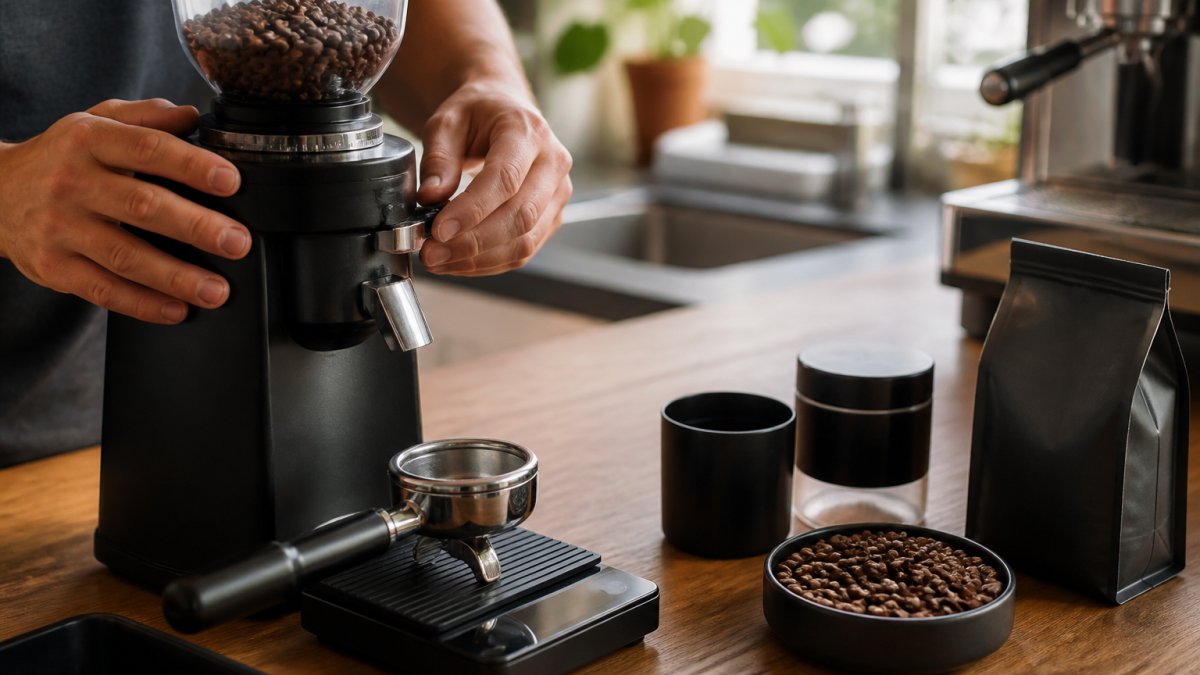
Start with a 1:2 ratio: about 18 grams of ground coffee in, roughly 36 grams of espresso out, in 25 to 30 seconds. This is the baseline for a traditional double basket with a medium roast.
Dial-In Recipes by Machine and Basket Type
The table below gives starting doses, yields, times, and temperatures for common setups. Treat these as launch points, every grinder and machine combination shifts the sweet spot slightly.
| Setup | Dose | Yield | Time | Temperature | Grind Starting Point |
|---|---|---|---|---|---|
| Traditional double basket, medium roast | 18 g | 36 g | 25-30 s | 200°F | Medium-fine, like fine table salt |
| Traditional double basket, light roast | 18 g | 40-45 g | 28-32 s | 202-205°F | Finer than medium roast; adjust finer if sour |
| Traditional double basket, medium-dark roast | 18 g | 36 g | 25-28 s | 198-200°F | Slightly coarser than medium roast |
| Larger basket (20-22 g) | 20-22 g | 40-44 g | 28-32 s | 200°F | Medium-fine; scale dose to basket rating |
| Single-shot basket | 9-10 g | 18-20 g | 20-25 s | 200°F | Coarser than double basket to avoid choking |
| Pressurized basket | 16-18 g | 30-36 g | 25-30 s | 198-200°F | Coarser; pressurized baskets are tolerant of grind |
Light roasts need more heat and a longer ratio because they are denser and less soluble. Medium-dark roasts extract more easily, so a coarser grind and shorter ratio keep them from turning bitter.
Reading the Shot: Sour vs. Bitter
If the shot runs fast and tastes sour or thin, grind finer; if it crawls out and tastes bitter or drying, grind coarser. Sourness means under-extraction, bitterness over-extraction. Channeling, water finding a path of least resistance, shows up as blond spurts and a shot both sour and bitter; fix distribution and tamp before changing the grind.
A Repeatable Tasting Method
Pull the same dose three times with small grind changes, taste each shot black, and log the time and weight. Taste at room temperature after a minute, bitterness and sourness show up more clearly warm than hot, making dialing in less frustrating.
When to Change the Recipe vs. Change the Bean
If three grind adjustments in the same direction still taste wrong, the problem may be the bean. Very fresh beans (under 5 days off roast) run gassy and inconsistent; very old beans (over 6 weeks) fade and taste flat. Check the roast date before blaming your technique.
Espresso Beans for Milk Drinks: Picking Beans That Hold Up
Espresso beans for milk drinks need enough body and sweetness to survive milk.
Our Mamiami is built for this. It is a medium-roast single-origin Colombian coffee with notes of citrus, brown sugar, peach, and chocolate, and its silky body holds its shape in a cappuccino or flat white.
If you mostly drink lattes, lean toward the medium-dark end. If you drink espresso neat and only occasionally add milk, a medium roast keeps more brightness.
Freshness, Roast Date, and Degassing: What to Check Before You Buy
Freshly roasted is not the same as roasted yesterday.
For espresso, a practical window is roughly 7 to 21 days after the roast date.
Check the bag for a roast date, not a best-by date, a best-by date hides how long the bag sat on a shelf.
Storage matters as much as timing: keep whole beans airtight, away from light and heat, and grind right before pulling.
Conclusion
Choosing the best Colombian coffee beans for espresso comes down to a short checklist: washed Arabica, high-altitude origin, a medium roast, and a recent roast date. Get those right and most of the dialing-in takes care of itself.
At Sexy Barista, we roast small-batch single-origin Colombian coffee in Miami and tune each profile for espresso and milk-based drinks. Our Mamiami medium roast brings citrus, brown sugar, peach, and chocolate to the cup, and our subscription gives you 20% off your first order, 10% off every recurring delivery, free shipping on orders over $60, and the flexibility to pause, skip, swap, or cancel anytime.

Get started with Sexy Barista and pull a shot that tastes like the coffee you actually paid for.
Frequently Asked Questions
Are Colombian coffee beans good for espresso?
Yes. Colombian beans are washed Arabica grown at high altitude, which gives them the density and balanced acidity that espresso extraction rewards. They typically pull shots with caramel and chocolate notes, a solid body, and a smooth finish. Medium roasts work well for straight espresso, while slightly darker roasts hold up better in milk drinks. The key is buying freshly roasted whole beans with a clear roast date and dialing in your grind to match.
What roast level is best for Colombian espresso beans?
Medium roast is the most versatile choice for Colombian espresso. It keeps the natural sweetness and balanced acidity intact while developing enough body for a syrupy shot. If you drink mostly lattes or cappuccinos, a medium-dark or espresso roast gives more chocolate and caramel notes that cut through milk. Light roasts can work but demand tighter dialing in and tend to taste sharp with milk. Avoid French roast unless you want smoke to dominate.
How should you dial in Colombian coffee beans for espresso?
Start with a 1:2 ratio, meaning 18 grams of ground coffee in and about 36 grams of espresso out, and aim for a 25 to 30 second shot. If the shot runs fast and tastes sour, grind finer. If it runs slow and tastes bitter, grind coarser. Change one variable at a time and taste after each adjustment. Colombian beans are forgiving, but fresh beans need a few days of degassing before they pull consistently.
Are Colombian beans good for espresso with milk?
They are excellent for milk drinks. Colombian beans bring chocolate, caramel, and nutty overtones that pair naturally with steamed milk, plus enough body to avoid tasting thin in a latte. For milk-heavy drinks, choose a medium-dark or espresso roast over a light roast so the coffee flavor stays present. A bean with natural sweetness and balanced acidity keeps the drink from turning flat. Test your pick as a straight shot first, then with milk.


Leave a comment
This site is protected by hCaptcha and the hCaptcha Privacy Policy and Terms of Service apply.