
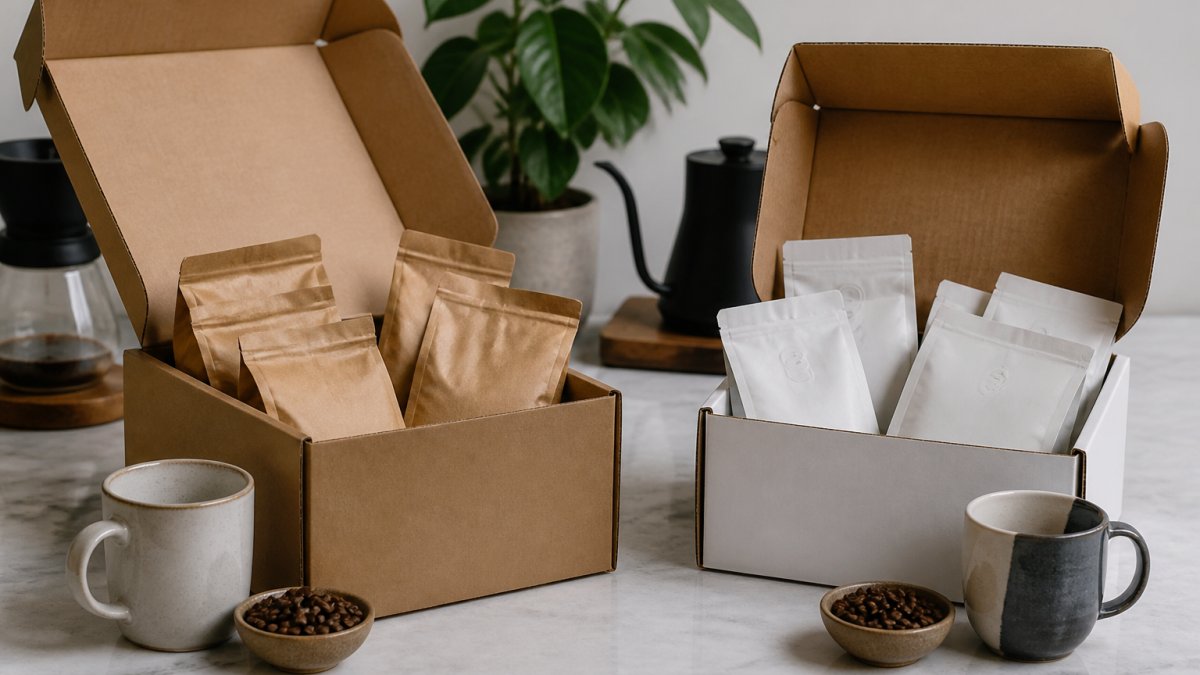
Trade Coffee vs Bean Box: A 2026 Comparison Guide
Last Updated: October 23, 2026
Quick Summary
Trade Coffee vs Bean Box comes down to business model: Trade Coffee is a roaster-matching marketplace built for variety and personalization depth, while Bean Box is a curated sampler shop built for small tastes and gifting. Neither is freshness-first, since both resell coffee roasted by partner companies.
- Trade Coffee pairs you with bags from a wide network of independent roasters after a taste quiz.
- Bean Box focuses on sampler-style boxes and gift subscriptions with smaller portions.
- Both services resell partner-roasted coffee, so roast dates vary by roaster.
- Espresso drinkers should prioritize a single roaster with a stable, espresso-tuned lineup.
- Test the cancellation flow before committing, since friction there is a red flag.
Table of Contents
- Trade Coffee vs Bean Box: How the Two Subscriptions Differ
- Trade Coffee Subscription Review: Roaster Variety and Matching
- Bean Box Subscription Review: Curation and Sampler Formats
- Coffee Subscription Customization: Quizzes, Roast Levels, and Grind
- Coffee Subscription Delivery Frequency and Freshness Timing
- Managing Your Plan: Pausing, Skipping, and Cancelling
- Which Subscription Fits Your Brew Method and Routine?
- Frequently Asked Questions
Trade Coffee vs Bean Box: How the Two Subscriptions Differ
Trade Coffee and Bean Box are both coffee subscription services, but they solve different problems.
The short answer: Trade Coffee wins on roaster variety and personalization depth. Bean Box wins on sampler formats and gifting. Neither is a freshness-first roaster, because both resell coffee roasted by other companies.
That distinction matters more than most reviews admit. When you subscribe to a marketplace, the roast date depends on a partner roaster's schedule, not a single production team you can hold accountable.
Here is the core difference between the two services at a glance.
| Service | Model | Best for | Key trade-off |
|---|---|---|---|
| Trade Coffee | Roaster-matching marketplace | Explorers who want roaster variety | Favorite bags may rotate out |
| Bean Box | Curated sampler shop | Gifting and trying small tastes | Smaller quantities run out fast |
| Both | Resell coffee from partner roasters | Flexible weekly-to-monthly delivery | Roast dates vary by partner |
Trade Coffee Subscription Review: Roaster Variety and Matching
A Trade Coffee subscription review usually leads with its biggest strength: breadth. Trade Coffee works as a marketplace, connecting subscribers to bags from a large roster of independent roasters rather than roasting anything itself.
How the matching works:
- You complete a taste and brewing questionnaire at signup
- The platform recommends roasters and bags based on your answers
- You can swap recommendations for other options before a shipment locks
- Each delivery can differ from the last, which suits explorers
The trade-off is consistency. A marketplace model means your favorite bag may rotate out, and the roaster behind it changes with each pick.
What most guides miss is the accountability gap. With a marketplace, freshness and roast consistency sit with dozens of partner roasters, not one team. Ask about roast dates before you commit.
Bean Box Subscription Review: Curation and Sampler Formats
A Bean Box subscription review centers on a different promise: curation over volume. Bean Box is known for sampler-style boxes and gift subscriptions, with smaller portions that let you taste across roasters before committing to full bags.
Who it suits:
- Gift buyers who want a ready-to-ship, presentable box
- Drinkers who like trying many coffees in small amounts
- Anyone unsure about roast preference who wants a low-commitment start
Where it falls short: sampler formats mean smaller quantities, so heavy daily drinkers may run out fast. And like Trade Coffee, Bean Box sources from partner roasters, so roast dates vary by box.
For a deeper look at how subscription models differ, the Specialty Coffee Association's guidance on coffee freshness is a useful primer on why roast timing matters.
Coffee Subscription Customization: Quizzes, Roast Levels, and Grind
Coffee subscription customization is where the two services diverge most. Trade Coffee leans on a detailed quiz that maps your taste preferences and brew method to specific roasters. Bean Box leans on curated boxes with less granular matching.
What to check on any customization flow:
- Roast level control: Can you lock light, medium, or dark, or does it drift?
- Grind options: Whole bean, espresso grind, pour-over, French press, or drip?
- Swap flexibility: Can you reject a recommendation before it ships?
- Decaf: Is a decaf track available without dropping the subscription?
A common mistake is treating the quiz as one-and-done. Your palate changes. Revisit your profile every few months, or you will keep receiving coffee tuned to a version of you that no longer exists.
At Sexy Barista, we skip the algorithm and curate directly: single-origin lots from Colombia, Guatemala, and Bali, each chosen for how it performs in espresso and milk-based drinks.
Coffee Subscription Delivery Frequency and Freshness Timing
Coffee subscription delivery frequency is flexible at both services, typically ranging from weekly to monthly, with the ability to skip. The bigger question is freshness: how close to the roast date does your bag arrive?
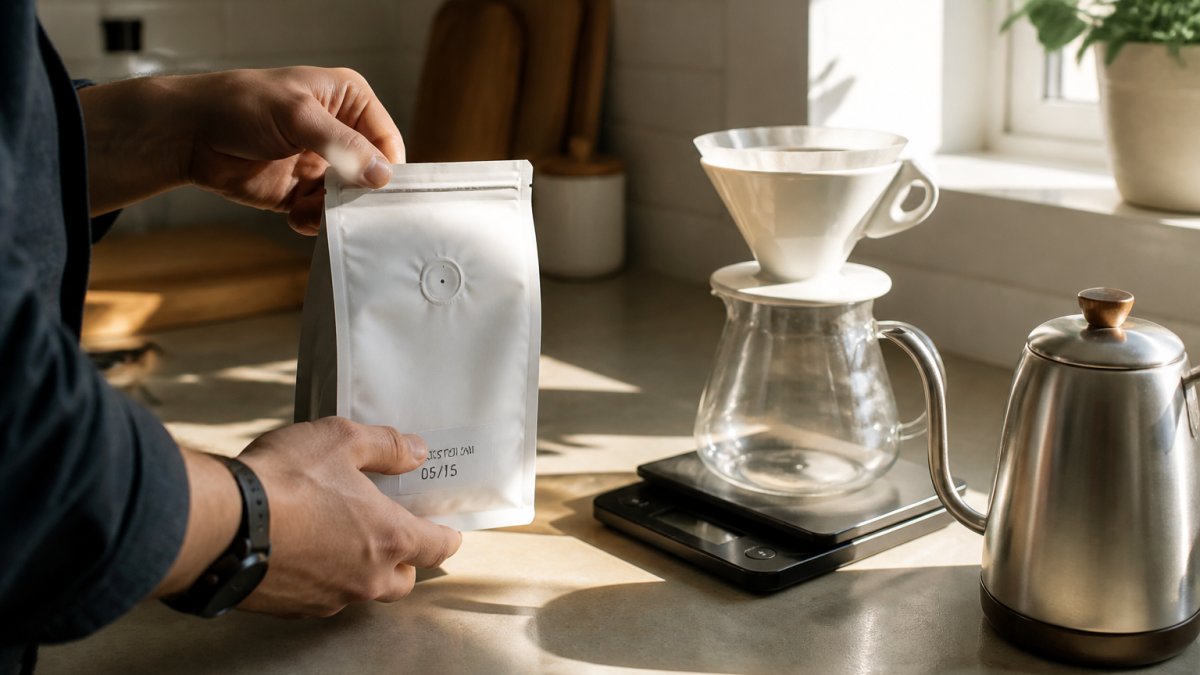
Freshness evidence to demand before subscribing:
- Roast date vs. best-by date: A roast date is a specific calendar date printed on the bag. A best-by date is a manufacturer's guess. If a service only prints best-by, you cannot verify freshness. Ask customer service directly: "Is a roast date printed on every bag?" If the answer is vague, walk away.
- Roast-to-ship window: This is the number of days between roasting and handing the bag to the carrier. A tight window (often 1-3 days for direct roasters) means you receive coffee near peak. Marketplaces may have longer windows because bags ship from partner roasters. Ask: "How many days pass between roast and ship?"
- Shipping method and transit time: Ground shipping typically adds 2-5 business days. Expedited options shorten that but add cost. The total days from roast to your door is what matters. A bag roasted 10 days ago and shipped overnight may be fresher than one roasted 3 days ago and shipped ground for a week.
- Whole bean by default: Pre-ground coffee stales faster. If a service defaults to whole bean and offers grind options at checkout, that is a good sign. If it only ships pre-ground, freshness suffers.
A practical test: Before committing, order a single bag or sampler. When it arrives, check the roast date. Calculate the days between roast and delivery.
Why this matters more for marketplaces: Trade Coffee and Bean Box both resell coffee roasted by partner companies. The roast-to-ship window depends on each partner's schedule, not a single production team. Some partners roast to order; others roast in batches and hold inventory. You cannot assume consistency across the network. Direct roasters, by contrast, control the entire timeline from roast to shipment, which is why they can often guarantee a tighter window.
Delivery frequency options: Both services let you choose intervals (often every 1, 2, 3, or 4 weeks) and skip shipments. But frequency affects freshness: a weekly subscription means smaller, more frequent roasts; a monthly subscription may mean bags roasted earlier and held. If freshness is your priority, choose a frequency that matches your consumption so you are not storing beans for weeks.
Questions to ask customer service:
- "What is your average roast-to-ship window?"
- "Do all partner roasters print roast dates?"
- "Can I request a specific roast date or shipping day?"
- "What is your policy if I receive coffee older than X days?"
A service that answers these clearly is confident in its freshness. A service that deflects is telling you something.
Managing Your Plan: Pausing, Skipping, and Cancelling
Subscription management is the most under-covered part of any coffee subscription review, and it is where buyers get burned.
Pausing vs. skipping vs. cancelling:
- Skip: You delay one shipment by a set period (often one cycle). The subscription remains active. Most services allow this with no penalty, but some require you to skip before a cutoff date (e.g., 48 hours before the next charge).
- Pause: You suspend the subscription for a defined number of weeks or months. This is useful for travel or a coffee backlog. Check whether pausing has a maximum duration and whether it affects your grandfathered pricing or plan terms.
- Cancel: You end the subscription. The key questions are: Is there a minimum commitment? Do you cancel online or must you call/email? Are there fees? What happens to pending shipments?
A practical pre-signup checklist:
- Can you skip a single shipment without penalty?
- Can you pause for a set number of weeks (vacation, travel)?
- Is there a minimum commitment before cancellation?
- Do you cancel online, or must you call or email?
- Are there restocking or cancellation fees?
- What is the cutoff time to make changes before a shipment?
- Does the service send a reminder before charging?
Documenting the actual steps: For each service, find the help center or FAQ page that explains management. Look for step-by-step instructions.
Restrictions to watch for:
- Minimum commitment: Some services require you to receive a certain number of shipments before cancelling. This is often disclosed at signup but easy to miss.
- Cancellation fees: Rare, but some services charge a fee if you cancel before a minimum term.
- Refund policy: If you cancel after a shipment is processed, you may not be able to get a refund. Check the policy on returns and refunds.
- Reactivation: If you cancel, can you restart later? Do you lose your quiz results or preferences?
The FTC angle: The FTC's guidance on negative option and subscription billing is worth reading before any recurring purchase. It explains your rights around automatic renewal and cancellation.
A service that makes cancellation hard is telling you something about how it keeps customers. Flexible plans should be easy to leave.
Which Subscription Fits Your Brew Method and Routine?
Brew method should decide more of this than brand loyalty does. Espresso demands consistency: the same beans, dialed in, week after week.
Match the service to your setup:
- Espresso and milk drinks: Prioritize a single roaster with a stable, espresso-tuned lineup over a rotating marketplace.
- Pour-over and drip: A matching service like Trade Coffee suits you, since variety is a feature.
- Gifting and sampling: Bean Box's sampler formats fit best.
- Consistency seekers: A direct roaster beats a marketplace every time.
This is where Sexy Barista fits for espresso drinkers. Our single-origin coffees are profiled for espresso and milk-based drinks, with flexible management (pause, skip, swap, or cancel) and free shipping on orders $60+.
For a broader view of brewing variables, Coffee Research's brewing fundamentals covers grind and extraction basics.
Choosing between a matching marketplace and a curated sampler comes down to what you actually drink. If you want endless variety, Trade Coffee delivers it.
Frequently Asked Questions
Is a Trade Coffee subscription worth it?
It depends on what you want from a subscription. Trade Coffee connects you with a large network of independent roasters and uses a taste quiz to match you with coffees, which suits drinkers who want constant variety and discovery. If you prefer a tighter, curated lineup where every bag is chosen for a specific profile, a smaller specialty roaster subscription may feel more consistent. Compare how each handles roast level, grind options, and delivery frequency before committing.
Is Bean Box a good coffee subscription?
Bean Box is known for curated selections and sampler-style boxes that let you try several coffees from different roasters in one shipment. That format works well for discovery and gifting. The trade-off is that you have less control over exactly which beans arrive. If you want to choose specific single-origin coffees and control grind size for espresso, check whether the plan offers that level of customization before you subscribe.
How do Trade Coffee and Bean Box compare for espresso drinkers?
Espresso drinkers should prioritize roast level, grind size options, and how recently the coffee was roasted. Trade Coffee lets you indicate brew method and grind preference during matching, while Bean Box leans toward sampler formats that may include whole bean or ground options. For milk-based drinks, medium to dark roasts with chocolate and caramel notes tend to hold up better. Confirm that the subscription lets you specify espresso and a grind suited to your machine.
Can you choose specific coffees with Trade Coffee or Bean Box?
Both services offer some level of choice, but the models differ. Trade Coffee emphasizes matching you to coffees based on a quiz and preferences, with the option to browse and select in some cases. Bean Box focuses on curated boxes and samplers, so the selection is more roaster-driven. If control matters most, look for a plan that lets you pick single-origin coffees, set roast level, and choose whole bean or ground for your brew method.


Leave a comment
This site is protected by hCaptcha and the hCaptcha Privacy Policy and Terms of Service apply.