

How to Identify Quality Coffee Beans: A 2026 Guide
Table of Contents
- Why Roast Date Beats Expiration Date Every Time
- Whole Bean vs. Pre-Ground: What Quality Coffee Beans Look Like
- What Is Single Origin Coffee Beans and Why Origin Transparency Matters
- Signs of Stale Coffee Beans You Should Never Ignore
- Sensory Testing Beyond Smell: Cupping and Flavor Balance
- Visual Inspection and Defect Detection in Quality Coffee Beans
- Where to Find Fresh, High-Quality Coffee Beans
- Frequently Asked Questions
Last Updated: September 14, 2026
Why Roast Date Beats Expiration Date Every Time
The single most reliable indicator of quality coffee beans is the roast date, not the expiration date on the bag. A roast date tells you when the flavor clock starts ticking. An expiration date is a manufacturer's guess at shelf life, often calculated from packaging rather than roasting, and it can stretch months into the future on beans that have already lost their best qualities.
At Sexy Barista, we roast in small batches and stamp the roast date because there is no honest way to talk about freshness without it. Coffee is an agricultural product, not a shelf-stable commodity. Once roasted, beans degas and oxidize, and that oxidation turns a vibrant, fruit-forward cup flat and papery.

The 2-Week Window for Peak Flavor
Most specialty roasters agree that roasted coffee peaks between roughly 4 and 14 days after roasting. Early on, aggressive degassing can make espresso pull unevenly; after two weeks, oxidation dominates and flavor flattens. That is why the roast date, not the "best by" date, should drive your purchase.
How to Read Coffee Roast Dates Like a Pro
Learning how to read coffee roast dates takes about ten seconds. A clear "Roasted on" date, day and month, is the gold standard. Vague phrases like "best before" or a lot code with no roast date are a red flag. If a bag only shows a packed-on date, ask the roaster directly.
Whole Bean vs. Pre-Ground: What Quality Coffee Beans Look Like
Whole bean coffee stays fresher far longer than pre-ground, because grinding dramatically increases the surface area exposed to oxygen (pubmed.ncbi.nlm.nih.gov). Whole quality coffee beans keep their aromatic oils locked inside until you grind them, which is why most specialty roasters recommend buying whole bean and grinding right before brewing.
That said, pre-ground coffee is not automatically bad. With a recent roast date and a valve-sealed bag, it can still deliver a solid cup within the first week or two. It just stales faster, so buy smaller quantities more often.
| Factor | Whole Bean | Pre-Ground |
|---|---|---|
| Freshness window | 2-4 weeks | 3-7 days |
| Aroma retention | High | Drops quickly |
| Grind consistency | You control it | Fixed at purchase |
| Best for | Espresso, pour-over | Drip, convenience |
What Is Single Origin Coffee Beans and Why Origin Transparency Matters
Single origin coffee beans are sourced from one specific country, region, or even one farm, rather than blended from multiple origins. A single-origin label lets you trace flavor back to a place, a processing method, and a harvest. Blends can be excellent, but they are designed for consistency, not transparency.
Origin transparency means telling you exactly where the coffee came from and how it was processed. A roaster who lists the region, farm or cooperative, and processing method gives you what you need to understand what is in your cup.
Natural vs. Washed Processing Methods
Natural processing dries the cherry with the fruit attached, producing heavier body and fruit-forward notes. Washed processing removes the fruit first, yielding cleaner, brighter acidity. Neither is better; knowing which you prefer helps you choose.
Signs of Stale Coffee Beans You Should Never Ignore
Recognizing the signs of stale coffee beans early saves you from brewing disappointment. The clearest signals are a dull, matte surface instead of a slight sheen, a weak or cardboard-like aroma, and lightweight or brittle beans. Fresh beans smell sweet and complex the moment you open the bag.
Packaging Technology and One-Way Valves
A one-way valve on the coffee bag is a genuine quality signal. It lets carbon dioxide escape during degassing while keeping oxygen out, slowing oxidation. A sealed bag with no valve traps gas and can taste flat or sour when opened.
Sensory Testing Beyond Smell: Cupping and Flavor Balance
Smell is only the beginning. Professional cuppers evaluate a fixed set of attributes, fragrance, flavor, aftertaste, acidity, body, balance, sweetness, cleanliness, and uniformity, and you can run a simplified version at home. The point is to build a reference library in your palate so you can tell a genuinely good bean from one that is merely fresh.
How to Cup Coffee at Home
- Grind coarse, about the texture of sea salt, and weigh roughly 8.25 grams of coffee per 5 ounces of water. A consistent dose matters more than a perfect one.
- Pour water just off the boil (about 200°F) over the grounds and start a timer. Do not stir yet.
- At 4 minutes, break the crust with a spoon and smell the burst of aromatics, the fragrance note fades within seconds.
- Skim the foam and grounds off the surface and let the cup cool to about 160°F before tasting.
- Slurp from a spoon so the coffee sprays across your palate and reaches the back of your nose, the mechanism that lets you taste aroma and flavor together.
- Taste at three temperatures, hot, warm, and cool. A good coffee stays coherent as it cools. A flawed one falls apart: bitterness spikes, or a hollow, papery note appears.
What Each Attribute Is Telling You
- Acidity is not sourness. It is the bright, juicy sensation, citrus, berry, stone fruit, that makes coffee taste alive. Low acidity reads flat; excessive acidity reads as vinegar.
- Body is the tactile weight on your tongue, from tea-like to syrupy. It comes largely from dissolved solids and oils, which is why a stale bean feels thin.
- Sweetness is the counterweight to acidity and bitterness. When present, the cup feels rounded; when missing, the same acidity turns sharp.
- Aftertaste is what lingers 30 seconds after you swallow. A clean, sweet finish signals quality; a dry, astringent, or metallic finish points to a defect or under-developed roast.
- Balance means no single attribute dominates. Bright acidity should be supported by sweetness and a rounded body, not fighting them.
The Processing Method Shows Up in the Cup
This is where cupping becomes a buying tool. Washed coffees cup clean and bright, with crisp acidity and a shorter, sweeter finish. Natural coffees cup heavier and fruitier, sometimes with a fermented, wine-like or berry-jam character and a longer finish. Honey and hybrid processes land in between.
Cup a washed and a natural side by side and the difference is not subtle. Once you have tasted both, you can read a bag's processing label and predict roughly what you are about to drink, the whole point of paying attention to origin transparency.
A Simple Home Scorecard
You do not need a formal form, but writing down four numbers on a scale of 1 to 5, acidity, body, sweetness, and finish, forces you to taste deliberately. Cup the same coffee at day 5 and day 15 and compare. The drop in sweetness and rise in papery, flat notes is the clearest demonstration of why roast date matters.
Visual Inspection and Defect Detection in Quality Coffee Beans
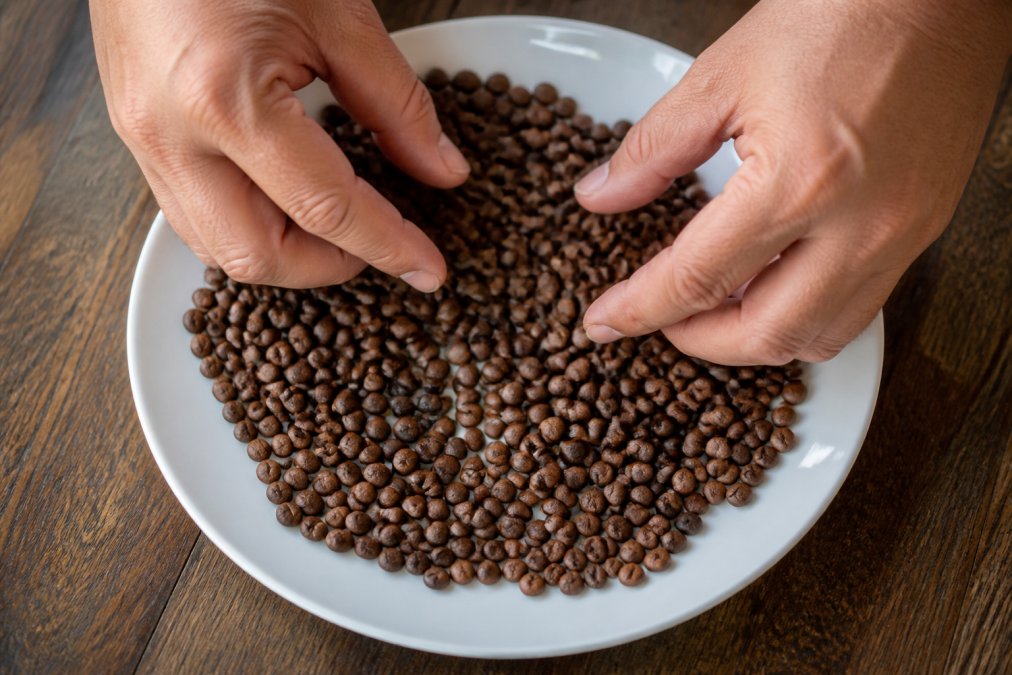
Uniformity is the fastest visual test, but the real skill is knowing what you are looking at when it breaks down. Spread a handful of beans on a white plate in daylight and sort them into two piles: beans that look like the majority, and beans that do not. The size of the second pile tells you more about quality than any single bean.
The Defect Categories That Actually Matter
Green coffee is graded by counting defects per sample weight, and the same categories show up in roasted beans in slightly different form. The ones you can spot at home:
- Full black and partial black, beans that are entirely or mostly blackened from over-fermentation, mold, or a dead cherry on the tree. These taste phenolic, medicinal, or like iodine. A single full black can taint a whole cup.
- Sour or vinegar beans, pale, yellowish, or wrinkled beans from under-ripe cherries or improper fermentation. They read as acetic or vinegary in the cup.
- Floaters and immature beans, pale, lightweight beans that never developed. They taste grassy, peanutty, or papery.
- Broken, chipped, and cut beans, mechanical damage from hulling or transport. They oxidize faster than intact beans and stale unevenly.
- Insect damage, small bore holes, often with a dark rim, from coffee berry borer. These beans can carry off-flavors and are a food-safety concern at scale.
- Quakers, under-developed beans that stay pale through the roast because they lacked the sugars to brown. They taste like dry cereal or wood and are the most common defect in otherwise good bags.
- Shells, husks, and stones, chaff and foreign matter that survived sorting. Stones are a grinder-killer and a hard fail.
What the Counts Mean
Specialty coffee is defined in part by defect thresholds. Under the Specialty Coffee Association's green coffee grading standard, a sample must be free of Category 1 defects (full black, sour, foreign matter) and stay under a small allowance of Category 2 defects (broken beans, quakers) per 350 grams of green coffee (Standards). Commodity-grade coffee has no such ceiling, which is why a supermarket bag can legally contain a meaningful percentage of defects.
You cannot count green defects from a roasted bag, but you can estimate. A rough home test: weigh out about 60 grams of roasted beans, spread them out, and count anything that is clearly black, clearly pale, chipped, or holed. If you are finding more than a small handful across that sample, the lot was not tightly sorted.
Roast-Level Defects vs. Green Defects
Not every dark spot is a green defect. Scorching is dark, burnt patches on one face, usually from too much heat at the start of the roast. Tipping is a charred point at the end of the bean, from too much heat at the end. Facing is a flat, scorched patch from beans pressed against the drum. These are roast-profile problems, not sorting problems, and they tell you the roaster pushed too hard.
The Split-Bean Test
Break a bean in half along its center crack. You want an even color that matches the outside reasonably well. A dark, oily exterior with a pale, tan interior means the roast developed unevenly, and that bean will taste simultaneously bitter and grassy, one of the most common flaws in poorly roasted specialty coffee.
Where to Find Fresh, High-Quality Coffee Beans
The most reliable source is a roaster who prints roast dates and roasts in small batches, which gives tighter control over uniformity and freshness. Look for origin transparency, a one-way valve, and clear processing information. This is exactly how Sexy Barista operates: small-batch, single-origin coffees from Colombia, Guatemala, and Bali, each roasted in Miami and stamped with a roast date.

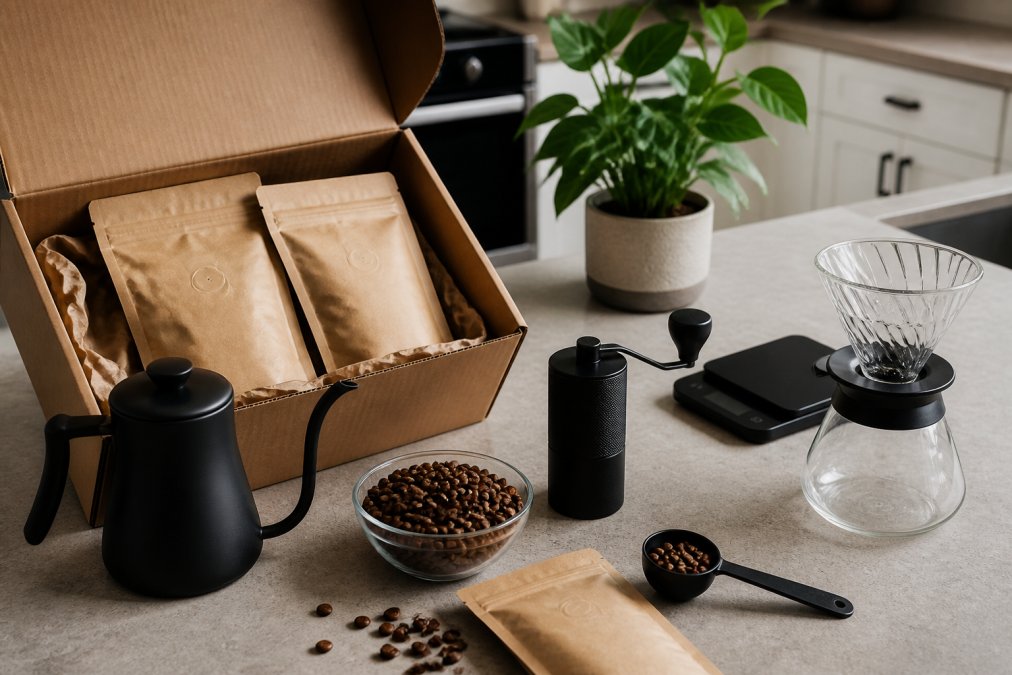
If you want to compare origins before committing to a full bag, the The Sexy Barista Coffee Discovery Trio lets you taste all three side by side. For a complete tasting experience with a cup included, the The Sexy Barista Discovery Set is the better starting point. Subscriptions save 10% on every recurring delivery, and you can pause, skip, swap, or cancel anytime.
Frequently Asked Questions
What should I look for when buying quality coffee beans?
Check the roast date first and buy beans roasted within the last two weeks. Look for uniform color and size, a matte finish without heavy oil, and a clear origin label. Whole beans preserve flavor longer than pre-ground. Avoid bags with no roast date or beans that smell flat and papery. Single-origin beans from a named region, like the Mamiami Colombian or Cattivo Guatemalan from Sexy Barista, give you traceable freshness and a distinct flavor profile.
Does the roast date matter when identifying quality coffee beans?
Yes, the roast date is the single most reliable freshness signal. Coffee hits peak flavor roughly 4 to 14 days after roasting, then declines as oxidation and degassing continue. Bags stamped only with a best-by or expiration date tell you nothing about when the beans were actually roasted. A roast date printed clearly on the bag, ideally within two weeks of purchase, is the mark of a roaster who cares about how the coffee tastes when it reaches you.
How does single-origin status affect coffee bean quality?
Single-origin means the beans come from one farm, region, or cooperative rather than a blend of many sources. That traceability lets roasters highlight a specific flavor profile and lets you judge consistency from bag to bag. It does not guarantee quality on its own, but combined with a recent roast date and specialty-grade sorting, single-origin beans from regions like Huehuetenango in Guatemala or the Bali highlands tend to deliver cleaner, more distinctive notes than commodity blends.
What are the visual indicators of high-quality coffee beans?
High-quality beans share a uniform size and color, a matte surface, and no visible defects like cracks, insect damage, or broken pieces. A slight sheen is normal on darker roasts, but a heavy oily coating often signals over-roasting or age. Look for consistent color across the batch, which points to an even roast. Beans that are charred black or unevenly browned usually mean the roast went wrong, and the cup will taste bitter or flat as a result.
What are the signs of stale coffee beans?
Stale beans lose their aroma first, smelling flat, papery, or like cardboard instead of sweet and roasty. The surface may turn dull or overly oily, and the beans feel lighter and less dense. Brewed coffee tastes hollow, sour in a harsh way, or simply lifeless with no aftertaste. If the bag has no roast date, was opened weeks ago, or sat in a warm cabinet, treat it as stale. Store beans in an airtight container away from light and heat to slow oxidation.
Fresh quality coffee beans reward attention: check the roast date, buy whole bean, confirm origin transparency, and inspect for defects before you brew. Sexy Barista makes that easy with small-batch, single-origin coffees roasted in Miami, each optimized for espresso and milk-based drinks. Explore the Discovery Set or start a flexible subscription and taste the difference fresh roasting makes.


Leave a comment
This site is protected by hCaptcha and the hCaptcha Privacy Policy and Terms of Service apply.