
Buy Small Batch Specialty Coffee Beans: Top Picks
Table of Contents
- Why Small Batch Coffee Beans Taste Different
- Quick Comparison: Sexy Barista Small Batch Coffees
- Mamiami: Best Coffee Beans for Espresso and Pour-Over
- Cattivo: Guatemalan Roast for Milk-Based Drinks
- Loosey Goosey: Smooth Bali Beans for Everyday Brewing
- How to Store Coffee Beans After Delivery
- Best Small Batch Coffee Roasters: What to Look For
- Conclusion
- Frequently Asked Questions
Last Updated: October 12, 2026
Why Small Batch Coffee Beans Taste Different
Small batch coffee tastes different because it is roasted in smaller quantities, which gives the roaster tighter control over heat and timing, and it usually reaches you within days of roasting instead of months. At Sexy Barista, we roast in small batches in Miami for exactly this reason: the roast date on the bag tells you how much life is left in the coffee.

Mass-market coffee is roasted for shelf stability. Small-batch roasting optimizes for flavor instead. The trade-off is simple: you get brighter, more defined flavor notes, but you need to drink it within a few weeks.
How to Read a Roast Date Before You Buy
A roast date tells you when the beans left the roaster, and it matters more than any "best by" stamp. Coffee is at its best roughly 4 to 14 days after roasting for most brewing methods.
Here is what to check before you buy:
- Roast date, not expiry date. Expiry dates are often a year out and tell you nothing useful.
- Days since roast. Under 21 days is ideal for filter, under 30 for espresso.
- Bag format. One-way valve bags let beans degas without going stale.
- Whole bean vs. ground. Whole bean holds flavor longer; grind right before brewing.
Quick Comparison: Sexy Barista Small Batch Coffees
Most roundups list a coffee, a roast level and a few flavor words, then leave you to guess whether the bag is worth the money.
| Coffee | Origin | Roast | Flavor Notes | Price | Price per oz | Grind Options | Best For |
|---|---|---|---|---|---|---|---|
| Mamiami | Colombia | Medium | Citrus, brown sugar, peach, chocolate | $22.00 | ~$1.38/oz | Whole bean or ground | Espresso, pour-over, everyday |
| Cattivo | Guatemala (Huehuetenango) | Medium | Tangerine, golden raisin, toffee | $22.00 | ~$1.38/oz | Whole bean or ground | Espresso, milk drinks |
| Loosey Goosey | Bali | Medium | Baker's chocolate, cedar, molasses, vanilla | $22.00 | ~$1.38/oz | Whole bean or ground | Espresso, French press, everyday |
Every bag is stamped with a roast date, not a "best by" date. That is the single biggest difference between these coffees and the warehouse stock you find on a grocery shelf, where the bag may already be months old by the time you open it.
How to Read the Numbers Before You Buy
Price per ounce is the honest way to compare a small-batch bag against a supermarket bag. A 12-ounce supermarket bag at $9.99 works out to about $0.83 per ounce, but you are often paying for coffee roasted months earlier. A 12.7-ounce small-batch bag at $22.00 is roughly $1.38 per ounce, more than double, and the trade-off is freshness and traceable origin, not volume.
A few practical benchmarks to keep in mind:
- Bag size. A 360 g bag brews roughly 24-30 cups at a 1:16 ratio, depending on dose. At two cups a day, that is about two weeks of coffee.
- Roast date window. Filter brewing is best within about 21 days of the roast date; espresso within about 30. Buy a bag you can finish inside that window.
- Grind. Whole bean holds flavor longer. If you order ground, choose the grind for your brewer and plan to finish the bag faster.
- Shipping. Free shipping applies on orders of $60 and up, so a single bag may carry a shipping charge while a two- or three-bag order often clears the threshold.
- Subscriptions. Recurring delivery saves 10% on every order and lets you pause, skip, or swap, which is the easiest way to keep a fresh bag arriving on schedule.
If you want to try all three before committing to a favorite, the Sexy Barista Coffee Discovery Trio bundles them for $49.99, about $16.66 per bag, or roughly $1.31 per ounce, which is the lowest per-ounce price in the lineup.
Mamiami: Best Coffee Beans for Espresso and Pour-Over
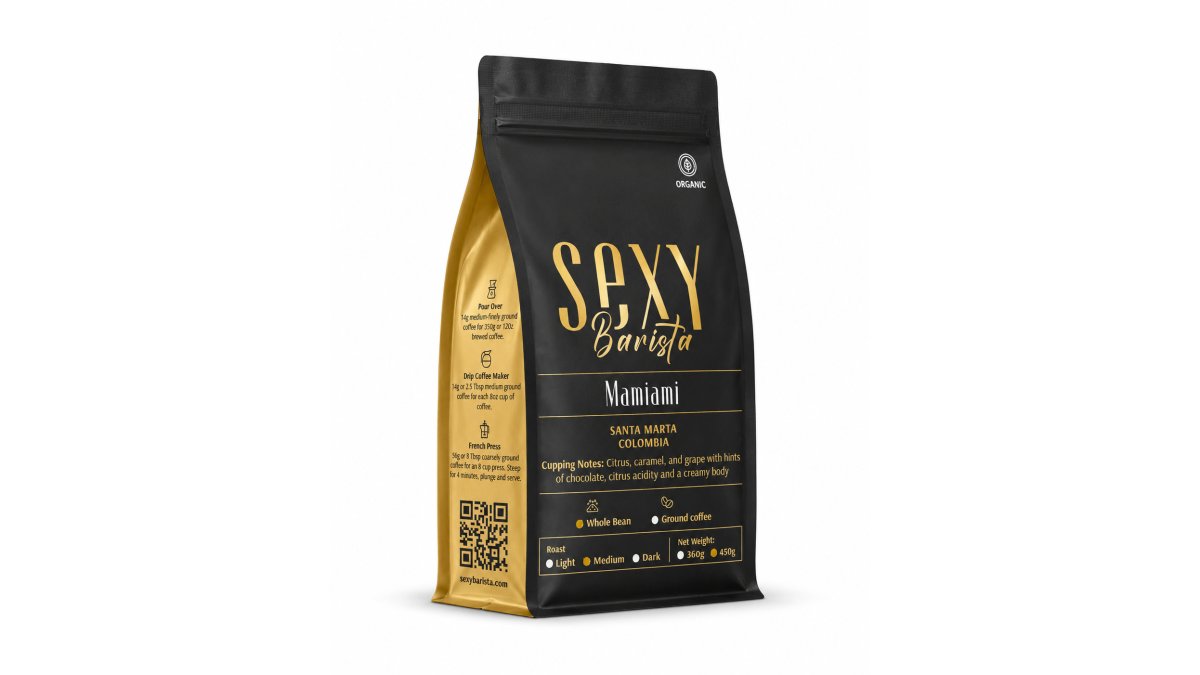
Mamiami is our most versatile coffee. It is a medium-roast Colombian single-origin with notes of citrus, brown sugar, peach, and chocolate, and its smooth, silky body works across espresso, pour-over, and everyday brewing. For anyone learning to buy small-batch specialty coffee beans for the first time, this is the safest starting point.
Flavor Notes and Brewing Methods
The right grind changes everything. Match your grind size to your brewer.
Choose whole bean if you own a grinder. Choose ground if you want convenience, and buy smaller amounts more often.
Cattivo: Guatemalan Roast for Milk-Based Drinks
Cattivo is built for milk. This medium-roast Guatemalan coffee from Huehuetenango carries tangerine, golden raisin, and toffee notes, and its creamy, full body holds up when you add steamed milk. Its brightness cuts through sweetness instead of disappearing behind it.

If your daily drink is a latte or cappuccino, Cattivo is the pick. A common mistake is buying a dark, oily roast for milk drinks because it seems "stronger." In practice, a medium roast with real sweetness gives you a better-balanced cup.
Loosey Goosey: Smooth Bali Beans for Everyday Brewing
Loosey Goosey is the easygoing one. This medium-roast Bali coffee is wet-hulled and carries baker's chocolate, cedar, molasses, and vanilla notes, with a smooth, syrupy body that suits espresso, milk drinks, or a simple French press. If you want one bag that works no matter how you brew it, start here.
It is also the most forgiving for beginners. The sweeter, lower-acid profile means small mistakes in grind or timing do not wreck the cup.
How to Store Coffee Beans After Delivery
Storing coffee well is the difference between a great bag and a stale one. Keep beans in an airtight, opaque container at room temperature, away from light, heat, and moisture, and grind right before you brew.
What works, in order of impact:
The Sexy Barista Discovery Set →
- Seal the bag. Squeeze out air or move beans to a valve-sealed container.
- Keep it dark and cool. A cabinet beats a sunny countertop every time.
- Buy smaller, more often. A 360 g bag lasts most households 1-2 weeks.
- Skip the fridge. Condensation ruins beans. Freeze only if you will not touch them for weeks.
- Grind fresh. Whole bean stays flavorful far longer than pre-ground.
According to guidance from the National Coffee Association, proper storage is one of the most overlooked factors in how coffee tastes at home.
Best Small Batch Coffee Roasters: What to Look For
"Small batch" and "specialty" are marketing terms until a roaster proves them. Here is how to tell a real small-batch operation from a label, using criteria you can check on any product page in about two minutes.
1. A Printed Roast Date, Not a Best-By Date
A roast date tells you when the beans left the roaster. A "best by" date is usually set a year out and tells you almost nothing. If a roaster prints a roast date, they are confident the coffee is fresh enough to stand behind. If they will not, treat that as your answer.
2. Roast-to-Order Practice
Roast-to-order means the beans are roasted after you place the order, so they ship within days rather than sitting in a warehouse. The practical test: does the roaster describe roasting in small batches on a schedule, and does the bag arrive with a recent roast date? If the roast date is already three or four weeks old on arrival, the coffee was not roasted for you.
3. Traceable Sourcing
Traceability is where most roasters get vague. Look for a named country and region, Huehuetenango in Guatemala, a specific Colombian lot, a named Balinese cooperative, rather than a generic "house blend." Stronger still is information about the farm, cooperative, or processing method, such as washed or wet-hulled. A wet-hulled Balinese coffee, for example, tastes distinctly different from a washed Colombian, and a roaster who names the process is telling you they know the coffee.
4. Clear Roast Profiles and Tasting Notes
A roaster should state the roast level plainly- light, medium, or dark- and describe the cup in specific terms. "Citrus, brown sugar, peach, chocolate" tells you something. "Smooth and rich" tells you nothing. Specific notes also help you match a coffee to your brewer: brighter, fruit-forward coffees suit pour-over, while sweeter, fuller-bodied medium roasts hold up in espresso and milk drinks.
5. Grind and Brewing Guidance
Good roasters tell you how to brew what they sell. Look for which brewers the coffee was built for. This is the difference between a bag that works on the first try and one you fight with for a week.
6. Subscription Flexibility
If you plan to buy regularly, check whether you can pause, skip, swap or cancel without a phone call. Life gets in the way of coffee deliveries, and a roaster that makes pausing easy is one you will actually stay subscribed to.
7. Decaf and Accessible Options
The same goes for lower-cost entry options: a smaller bag or a sampler bundle lets you test a roaster before committing to a full-size order.
If you want to compare before committing, the Sexy Barista Discovery Set includes all three coffees plus an artisan cup for $64.99, and subscriptions save 10% on every recurring delivery with free shipping on orders $60+.

Conclusion
Choosing well comes down to three things: a printed roast date, a roast profile that matches how you brew, and storage that protects what you paid for. Get those right and even a simple setup produces noticeably better coffee.
At Sexy Barista, we roast small-batch single-origin coffees from Colombia, Guatemala, and Bali, each built for espresso and milk-based drinks. Start with the Discovery Set to find your match, or set up a subscription and save 10% on every delivery with flexible pause, skip, and swap options. Get started with Sexy Barista and taste the difference a fresh roast date makes.
Frequently Asked Questions
What does small batch coffee mean?
Small batch coffee means the roaster works in limited quantities, often 10 to 30 pounds per roast cycle, rather than running continuous industrial batches. This gives the roaster tighter control over roast profile, so each batch hits consistent flavor notes. Sexy Barista roasts in small batches in Miami, which is why bags ship within 2 to 4 business days of roasting rather than sitting in a warehouse.
How can I tell if coffee beans are freshly roasted?
Check the roast date printed on the bag, not just a best-by date. Coffee roast date freshness matters because beans peak roughly 4 to 14 days after roasting for most brew methods. Bags that only show a vague expiration window, or none at all, make it impossible to judge. Sexy Barista bags ship within 2 to 4 business days of roasting, so you know exactly how old the coffee is when it lands.
Which coffee beans are best for espresso?
Medium roasts with a creamy body and balanced acidity work best for espresso, because they extract evenly and hold up under milk. Cattivo, a medium-roast Guatemalan coffee with tangerine, golden raisin, and toffee notes, is built for espresso and milk-based drinks. Mamiami, a medium-roast Colombian with citrus and brown sugar notes, also pulls well as espresso but stays versatile for pour-over.
How should you store coffee beans to keep them fresh?
Keep whole bean coffee in an airtight, opaque container at room temperature, away from light, heat, and moisture. Do not store beans in the fridge; the humidity and odors transfer into the coffee. Freeze only if you will not use a bag within a few weeks, and thaw it fully before grinding. Grinding right before brewing preserves more flavor than pre-ground coffee sitting open.
Are small batch coffee beans better than mass-produced beans?
Small batch roasting gives the roaster more control over roast profile, so batches land consistently instead of drifting. Mass-produced beans are often roasted months before purchase and blended for uniformity rather than character. Small batch specialty coffee also tends to carry traceable origins and clearly marked roast dates. The trade-off is price per bag, which runs higher because batch sizes are smaller and fresher.


Leave a comment
This site is protected by hCaptcha and the hCaptcha Privacy Policy and Terms of Service apply.