
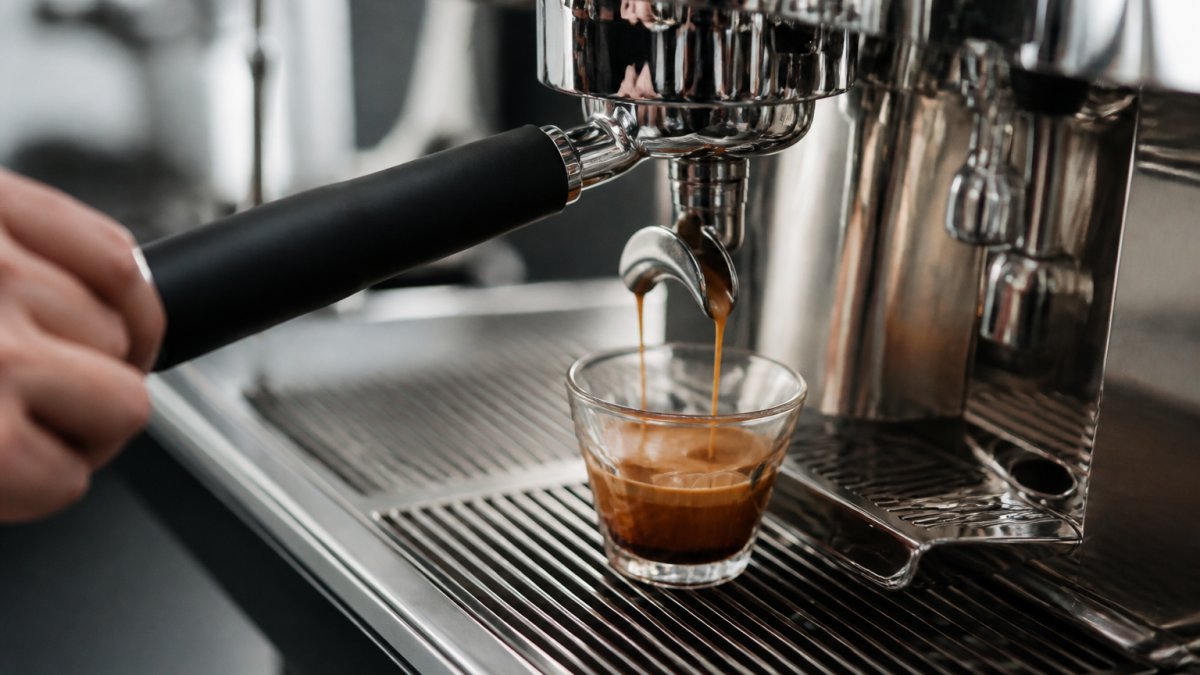
7 Habits That Make Espresso Shot Consistency Automatic
Last Updated: November 1, 2026
Quick Summary
Espresso shot consistency comes from locking four variables: dose, grind, yield, and puck prep. Weigh your dose and yield to the gram, adjust grind one small step at a time, and log every shot so you can return to a proven baseline instead of guessing.
- Set a baseline of 18 grams in a double basket with a target yield roughly double the dose.
- Log dose, grind setting, yield, time, and a two-word taste note for every shot over two weeks.
- Prime the grinder with a few grams and adjust the collar only while beans are flowing.
- Tamp level and consistent rather than hard, since an angled bed causes channeling.
- Before touching the grinder, confirm filtered water, full warm-up, and a clean group and basket.
Table of Contents
- Why Your Espresso Shot Consistency Breaks Down
- Espresso Dialing In: Build a Repeatable Baseline
- Espresso Grind Size: The Setting That Changes Everything
- Espresso Dose and Yield: Lock In Your Ratio
- Puck Prep: Distribution and Level Tamping
- Espresso Shot Troubleshooting: A Decision Tree for Off Shots
- Water, Temperature, and Machine Stability
- Bean Age and Storage: Why Your Coffee Shifts Day to Day
- Frequently Asked Questions
Why Your Espresso Shot Consistency Breaks Down
Espresso shot consistency is the ability to pull back-to-back shots that taste the same, and it rarely fails for one dramatic reason.
You control more than you think. Here are seven habits that make repeatability automatic rather than lucky. A recipe only works for one bag of coffee on one day, what you need is a system.
The Four Variables You Can Actually Control
Four things decide every shot: dose, grind, yield, and puck prep. Water temperature and machine stability sit underneath those as the foundation. You can't control humidity or the roast date of beans you already bought, but you can control what goes in the basket and what comes out.
- Dose: how many grams of ground coffee go in
- Grind: how fine the burrs set the particles
- Yield: how many grams of liquid land in the cup
Lock those four and espresso shot consistency stops being a coin flip.
Espresso Dialing In: Build a Repeatable Baseline
Espresso dialing in is the process of adjusting grind and dose until a shot hits a target taste and time, then recording it so you can return to it. Start with one coffee, one basket, one dose weight, and one target yield.
Here's the baseline we'd set:
- Pick a dose, say 18 grams in a double basket
- Set a target yield, roughly double the dose
- Grind, distribute, tamp, pull
- Weigh the output and note the time
- Adjust grind only, and only one small step at a time
For a deeper walkthrough, our guide on how to dial in espresso at home walks through each adjustment in detail.
Log Every Shot for Two Weeks
This is the habit almost nobody builds, and it fixes everything. Write down dose, grind setting, yield, time, and a two-word taste note for every shot.
- Date and coffee name
- Dose in grams
- Grinder setting number
Two weeks of notes turns guesswork into a pattern. You'll see that your "random" bad shots cluster around one grind setting or one morning when the beans were a week older. That's the data that makes espresso shot consistency a skill instead of a mood.
Here is the baseline recipe and the shot log fields that make repeatability automatic.
| Step | What to do | Value or note |
|---|---|---|
| 1 | Pick a dose in a double basket | 18 grams |
| 2 | Set a target yield | Roughly double the dose |
| 3 | Grind, distribute, tamp, pull | One coffee, one basket |
| 4 | Weigh the output and note the time | Log every shot |
| 5 | Adjust grind only | One small step at a time |
| Log | Record dose, grind, yield, time, taste | Two-word taste note |
| Log | Note date and coffee name | Two weeks of notes |
Espresso Grind Size: The Setting That Changes Everything
Espresso grind size is the single most powerful adjustment you have, and it drifts fastest. A grinder that shifts a hair changes extraction more than any tamping tweak ever will.
A few practical rules:
- Prime the grinder: run a few grams and discard before your first shot of the day
- Adjust only while running: move the collar with beans flowing, never on an empty burr set
- One notch at a time: big jumps make it impossible to know what worked
If you're shopping for beans that behave predictably in espresso, our pick of the best coffee beans for espresso covers what to look for in a roast built for pressure.
Espresso Dose and Yield: Lock In Your Ratio
Espresso dose and yield are the two numbers that define your recipe, and they should stay fixed while you dial in grind. A 1:2 ratio means double the liquid weight to the dose weight. That's the anchor. Weigh the dose, never scoop it, a scoop varies by several grams depending on grind and how you pack it.
Weigh In, Weigh Out, Every Time
Put the portafilter on a scale, tare, and dose to the tenth of a gram. Then pull the shot onto a scale and stop at your target yield.
- Dose 18.0 grams in
- Target 36.0 grams out
- Note the time it took
The scale is the referee. Without it, you're tasting memory, not data. Weighing both ends removes the two biggest sources of drift in one move.
Puck Prep: Distribution and Level Tamping
Puck prep is the routine between grinding and pulling: distributing grounds evenly, then tamping level with steady pressure.
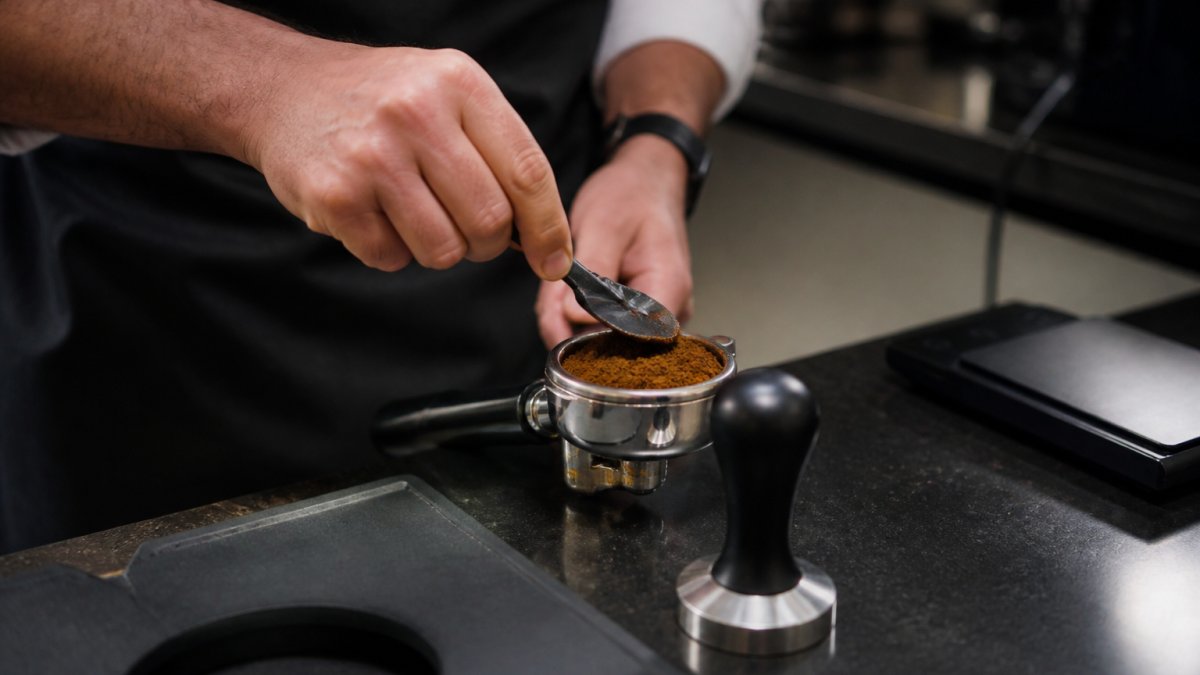
Keep the routine identical every time:
- Dose onto the scale
- Stir or shake to break up clumps
- Level the bed flat
- Tamp straight down, firm and even
- Wipe the rim and lock in
Watch out: tamping at an angle creates a thin side that water finds first. That's channeling, and it shows up as a sour, watery shot with a fast finish.
Espresso Shot Troubleshooting: A Decision Tree for Off Shots
Espresso shot troubleshooting works best as a decision tree, not a panic. Read the shot, follow one branch at a time, and change only one variable before pulling again, change grind and dose together and you learn nothing about which one fixed the shot. Start by writing down what the shot actually did: time, yield, flow pattern, and taste.
Branch 1: The Shot Ran Fast and Tastes Sour or Thin
Fast flow means water moved through the puck too easily. Work through these in order:
- Check the dose. If the basket is underfilled, water has a short path. Weigh the dose again, a scoop can drift several grams.
- Grind finer, one small step. Pull again and compare time and taste. If the shot slows but still tastes sour, the problem is likely extraction, not flow.
- Check for channeling. A fast shot with a pale, uneven cone or a spray from the spout often means water punched through one side. See the channeling test below.
Branch 2: The Shot Ran Slow and Tastes Bitter or Dry
Slow flow means the puck is resisting water. Before you coarsen the grind, rule out the cheap causes:
- Basket overload. If the dose is above the basket's rated capacity, the puck presses against the shower screen and restricts flow. Drop the dose slightly and re-test.
- Grind coarser, one small step. If time normalizes but bitterness remains, the shot may be over-extracted from temperature or yield rather than grind.
- Check yield. A shot that runs past its target yield will taste bitter even at a good grind. Stop at the logged yield and taste.
Branch 3: The Shot Sprayed, Gushed, or Poured Unevenly
This is channeling until proven otherwise. Run a simple channeling test:
- Pull a shot into a bottomless portafilter if you have one, and watch the cone. A healthy extraction forms a single centered stream that darkens evenly. A blond gusher, a spritz, or a stream that wanders to one side is channeling.
- Without a bottomless basket, look at the spent puck. Cracks, a divot, or a wet crater on one side are evidence of uneven flow.
- Check the basket for leftover grounds or oil buildup on the rim, which can prevent a clean seal.
If channeling appears, fix puck prep before touching the grinder: distribute evenly, tamp level, and confirm the basket is clean and dry. An angled or uneven bed will channel no matter how hard you press.
Branch 4: The Shot Was Fine Yesterday and Off Today on the Same Settings
Do not touch the grinder first. Same settings plus different results points to a changing input:
- Bean age. Coffee degasses as it rests, and the same bag behaves differently at three days off roast than at three weeks. Note the roast date and how many days the bag has been open.
- Storage. Beans in a warm or open container shift faster. Keep the bag sealed and away from heat.
- Machine state. A machine that hasn't fully heated, or that sat idle between shots, can pull cooler and change flow. Confirm warm-up before blaming the grind.
Separating Grinder, Machine, and Technique Problems
When the decision tree keeps pointing in circles, run controlled tests to isolate the source:
- Grinder test: grind the same dose at the same setting three times and weigh each output. A spread of more than a few tenths of a gram suggests retention or burr drift. Prime the grinder and repeat.
- Machine test: pull two back-to-back shots with identical dose, grind, and prep. If the first is consistently slower or cooler, the machine isn't thermally stable, give it a longer warm-up and a blank shot before the first real pull.
- Technique test: have the same person dose, distribute, and tamp the same way for five shots, logging each. If results still scatter, the variable is upstream in the grinder or machine, not in your hands.
Two resources help here. If bitterness is the complaint, our guide on why specialty coffee tastes bitter and how to fix your brew explains the causes in depth. If you want to restock or try a different bean mid-diagnosis, browse our espresso-ready coffees and start fresh with a known roast date.
Water, Temperature, and Machine Stability
Water and temperature are the quiet variables. They rarely announce themselves, but they decide whether the same dose and grind produce the same shot twice in a row.
Water Quality: The Invisible Input
Espresso is mostly water, so the water's mineral content shapes extraction (Water and the Taste of Coffee). Two things matter most:
- Scale-forming minerals. Hard water leaves calcium and magnesium deposits in the boiler, group head, and shower screen. As scale builds, flow and temperature drift, slowly enough that you blame the beans.
- Flavor carryover. Straight tap water can carry chlorine or off-notes that flatten a delicate single-origin. Filtered water keeps the cup clean and the machine healthy.
Use filtered water for every fill, and if your area's water is hard, test it or check your machine manual for the recommended water specification. Descale on the schedule your machine maker specifies rather than waiting for a symptom.
Brew Temperature: The Target and the Trap
Small temperature swings change what you taste. Cooler shots tend toward sour and thin; hotter shots toward bitter and dry. The trap is that a machine's displayed temperature isn't the same as the water temperature at the puck.
- Warm-up is longer than the manual suggests. A cold portafilter pulls heat out of the first shot.
- Preheat the path. Preheat the cup and the group, and pull a blank shot to warm the water path before the first real shot.
- Recovery between shots. Back-to-back shots can drop the boiler temperature. If your second shot consistently runs different from your first, give the machine a short recovery pause and log both shots.
Machine Stability: Repeatability Beats Raw Power
Stability beats raw power. A modest machine held at a steady temperature will out-repeat a fancy one that swings. Look for these behaviors in your own machine:
- Temperature surf. If your machine cycles a heater on and off, note where in the cycle you pull. Pulling at the same point each time is more repeatable than pulling whenever you feel ready.
- Idle drift. A machine left on for hours can drift warmer. If afternoon shots run bitter on unchanged settings, check machine temperature before the grinder.
- Group head cleanliness. Oils and old grounds on the shower screen and basket rim disturb flow and temperature. Backflush and clean on a regular schedule.
Once water and temperature are stable, the grinder and puck prep become the only variables left, which is exactly where you want your attention.
Bean Age and Storage: Why Your Coffee Shifts Day to Day
Bean age fools the most home baristas. Our guide on how to store specialty coffee beans covers the details that keep a bag stable longer.
This is also where your coffee choice matters. Our single-origin coffees, like Cattivo from Huehuetenango with its tangerine and toffee notes, or Mamiami from Colombia with citrus and brown sugar, are roasted in small batches.
Frequently Asked Questions
How can I make espresso shots taste the same every time?
Weigh your dose and yield on every shot, keep the grind setting fixed until the shot time drifts, and log the result. A 1:2 ratio in a 25-30 second window gives you a baseline you can repeat. Change one variable at a time, and only after two or three shots confirm the trend. Repeatable espresso shot consistency comes from measurement, not memory.
How do grind size and dose affect espresso consistency?
Grind size sets how fast water moves through the puck, and dose sets how much coffee that water has to pass through. A small grind change shifts shot time sharply, while a dose change shifts both strength and flow. Fix your dose first, then adjust espresso grind size in small steps. Changing both at once makes espresso shot troubleshooting nearly impossible.
How do I adjust espresso when the beans get older?
Freshly roasted coffee releases gas for days after roasting, which slows extraction. As beans age, shots tend to run faster and taste flatter, so you grind finer in small increments to compensate. Store beans in an airtight container away from light and heat, and note the roast date. Expect to re-dial every week or so as the bag empties.
Why does my espresso taste different from shot to shot?
The usual causes are uneven distribution, a tilted tamp, stale or clumpy grounds, and temperature swings from pulling back-to-back shots without a stable machine. Channeling, where water finds a weak path through the puck, is the most common culprit and shows up as blond streaks and a fast, sour shot. Fix puck prep and water temperature before you touch the grind.
Consistency isn't talent. It's a system: weigh everything, log every shot, change one variable at a time, and buy coffee with a roast date you can trust. That's where Sexy Barista comes in. Our small-batch single-origin coffees are curated for espresso and milk drinks, with flexible subscriptions you can pause, skip, swap, or cancel whenever you need. Get started with Sexy Barista and build a morning ritual that tastes the same every single time.



Leave a comment
This site is protected by hCaptcha and the hCaptcha Privacy Policy and Terms of Service apply.